The most unique protected area begins right at the village.
Qaleh Bala — the magic of nature: a village beside one of the most important protected habitats in Iran and the world, where the Pleske's ground jay, Asiatic cheetah, Persian onager, Jebeer gazelle, and Urial still keep the rhythm of the plains and mountains alive.
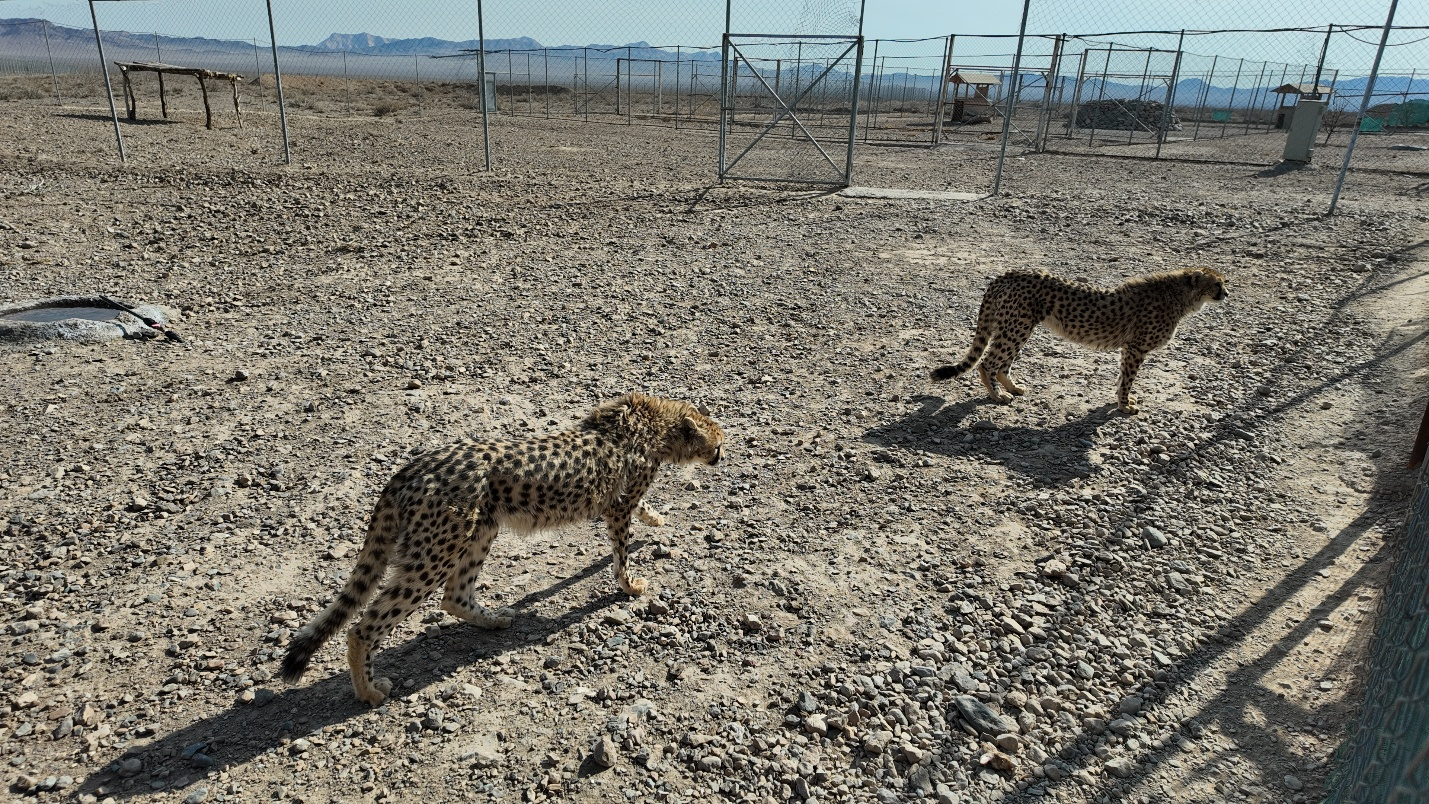
Wildlife of Qaleh Bala
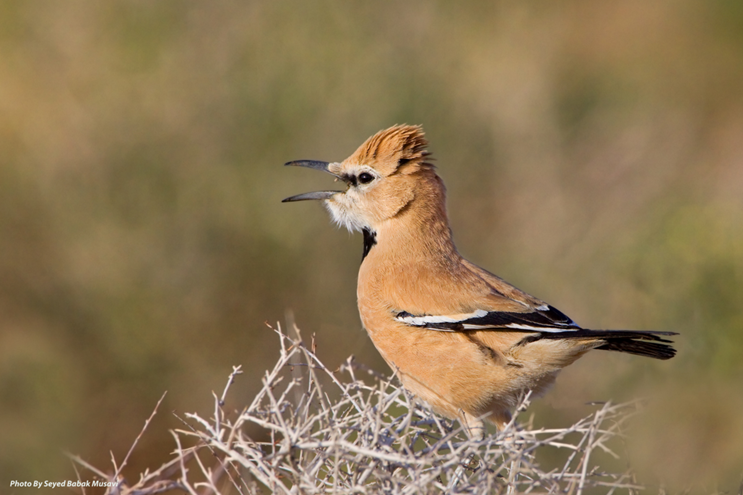
Iran's Endemic Bird
Pleske's Ground Jay
The Pleske's ground jay is one of the most distinctive native birds of Iran.
It lives mostly in the desert and semi-desert regions of central and eastern Iran. Thanks to its sandy coloring and harmony with the desert environment, it can hide easily among the sand and shrubs. The ground jay is a terrestrial bird that spends most of its time on the ground searching for food, including insects, seeds, and occasionally small desert fruits.
It plays an important role in balancing the desert ecosystem and is recognized as one of the symbols of Iran's desert wildlife. Because of environmental change and human activity, its natural habitat needs greater protection — preserving this valuable species means protecting a part of Iran's unique biodiversity.
Characteristics
- Body color
- Usually sandy or earthy brown plumage that camouflages it well in desert environments; black-and-white bands appear on the wings and tail.
- Body size
- Body length is usually about 24 to 26 cm.
- Weight
- Usually between 50 and 90 grams.
- Tail length
- A relatively long tail, about 10 to 12 cm.
- Lifespan
- Usually estimated at about 5 to 7 years in the wild.
- Male & female
- Males and females look very similar and are hard to tell apart by appearance.
- Movement
- Spends most of its time on the ground; rather than long flights, it tends to run or make short flights.
- Diet
- Insects, larvae, plant seeds, small desert fruits, and occasionally small reptiles.
- Mating
- The breeding season is usually in spring; the pair build a nest together among shrubs or on the ground.
- Egg-laying
- The female usually lays 3 to 6 eggs, and both parents help care for the chicks.
- Call
- Short, sharp, and fairly harsh, used to communicate with a mate or to give warning.
- Habitat
- Desert and semi-desert regions of Iran, especially sandy plains and hills with shrub cover.
- Special trait
- One of the few birds fully adapted to life in desert environments.
- Role in nature
- Plays an important part in controlling insect populations and keeping the desert ecosystem balanced.
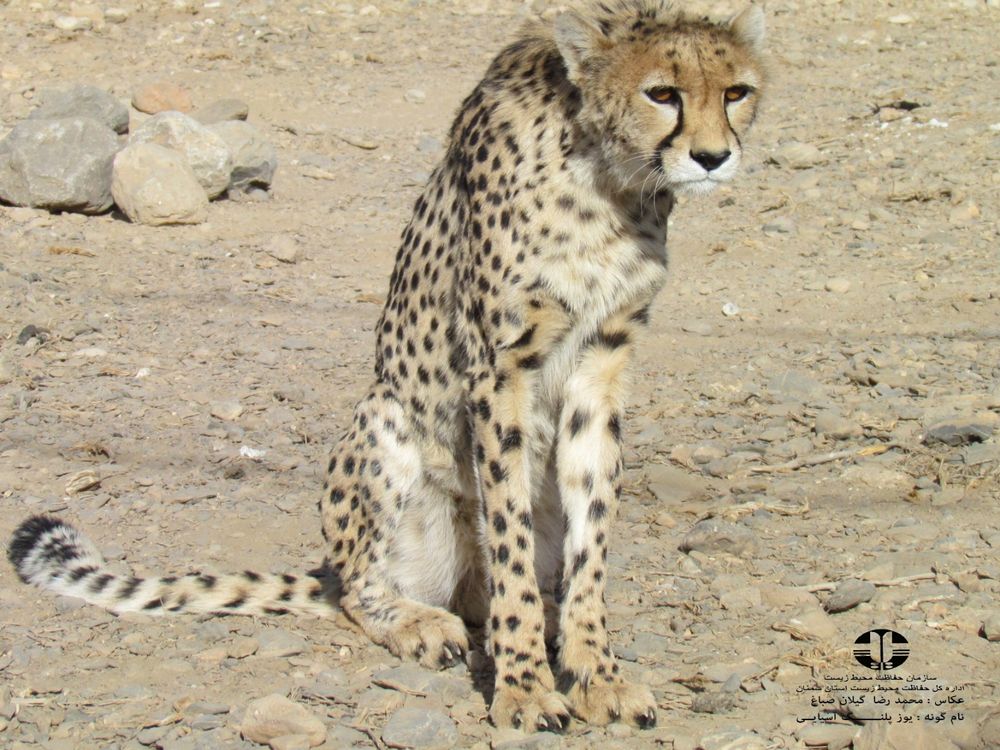
Apex Predator
Asiatic Cheetah
The Asiatic cheetah is one of the most precious and rarest wildlife species of Iran.
It lives mainly in desert and semi-desert regions. With its elongated body, long legs, and remarkable flexibility, it is the fastest land mammal in the world. Its coat is usually golden-yellow, covered all over with black spots, and two black lines — the "tear marks" — run from the corners of the eyes to the mouth as a distinctive feature.
An adult is about 110 to 150 cm long and weighs between 35 and 60 kg. It feeds mostly on gazelles, Jebeer, and small desert animals, chasing its prey at very high speed over short distances. Today the Asiatic cheetah is critically endangered, and protecting its natural habitat is extremely important — its presence is a sign of a healthy, living desert ecosystem.
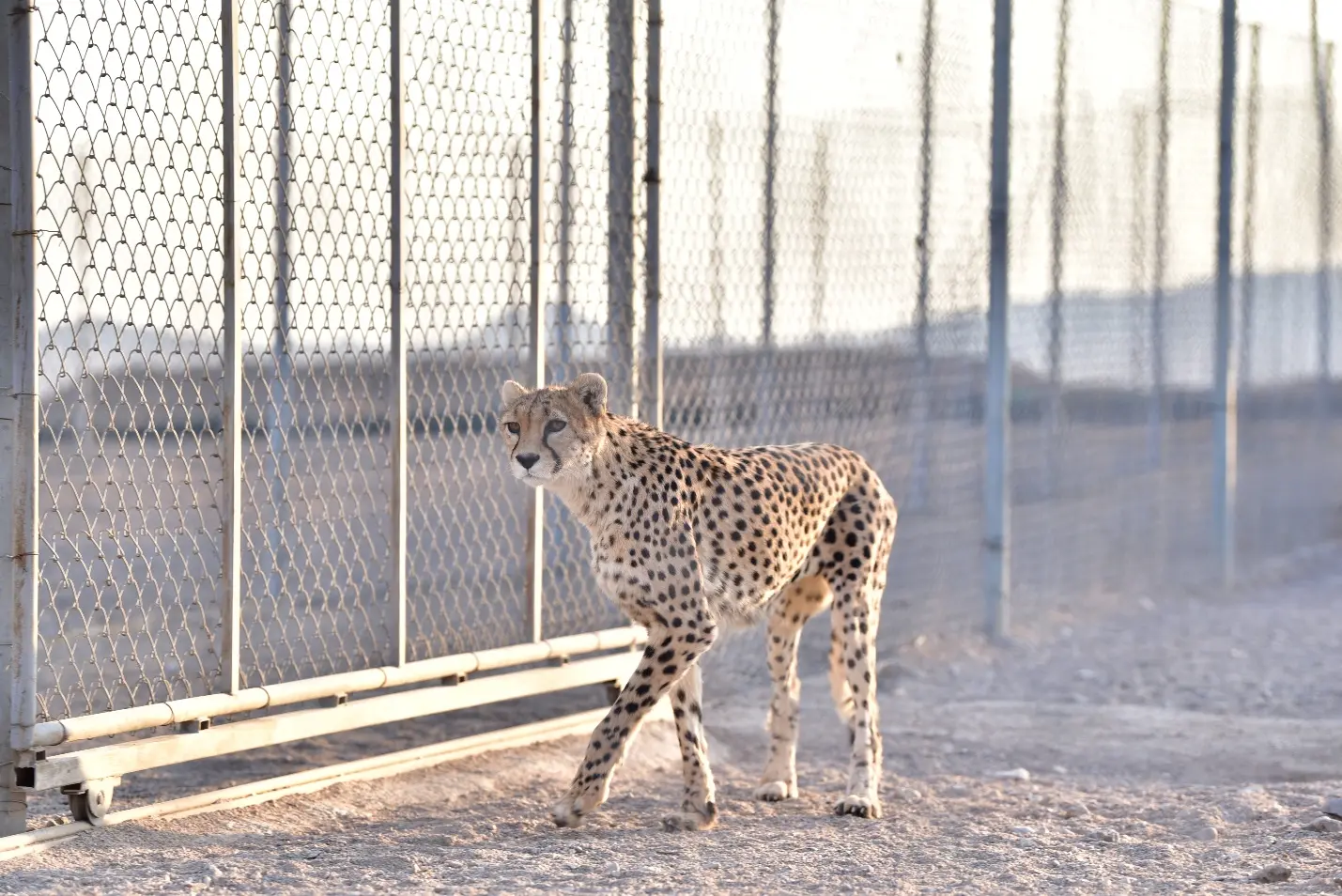
Characteristics
- Body color
- Usually golden-yellow or buff with black spots all over the body; the belly and inner legs are paler, almost white.
- Facial lines
- Two black lines run from the corner of each eye to the mouth — the "tear lines," a key feature of the cheetah.
- Dimensions
- Body length about 110 to 150 cm and tail about 60 to 80 cm.
- Weight
- Usually between 35 and 60 kg.
- Speed
- The fastest land mammal, reaching about 100 to 110 km/h in short bursts.
- Lifespan
- About 10 to 12 years in the wild, and up to about 15 years under protection.
- Male & female
- Males are usually slightly larger and heavier; males sometimes live in small groups while females are often solitary.
- Mating
- No fixed breeding season; gestation is about 90 to 95 days, usually producing 2 to 4 cubs.
- Call
- Unlike lions and leopards, it cannot roar; it makes whistles, chirps, and purrs to communicate.
- Way of life
- Mostly solitary, with a defined hunting territory.
- Hunting
- Feeds mainly on gazelles, Jebeer, and small desert animals, chasing prey at very high speed over short distances.
- Habitat
- Desert and semi-desert regions, open plains, and lightly wooded areas suitable for fast running.
- Role in nature
- An important wildlife species whose presence indicates the health of natural ecosystems.
Runner of the Plains
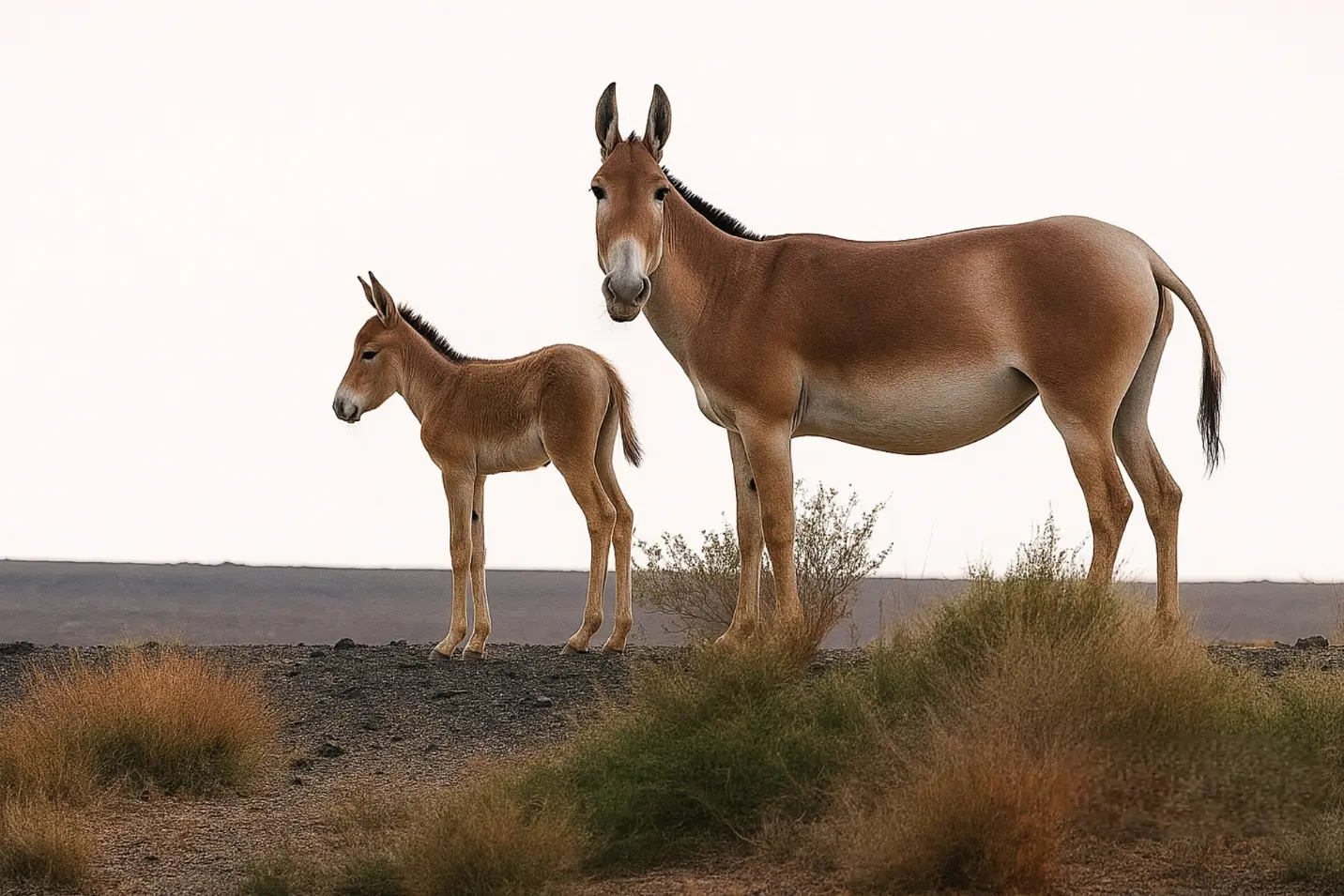
Persian Onager
The Persian onager is one of the valuable wildlife species of Iran, living in the plains and desert areas around Qaleh Bala.
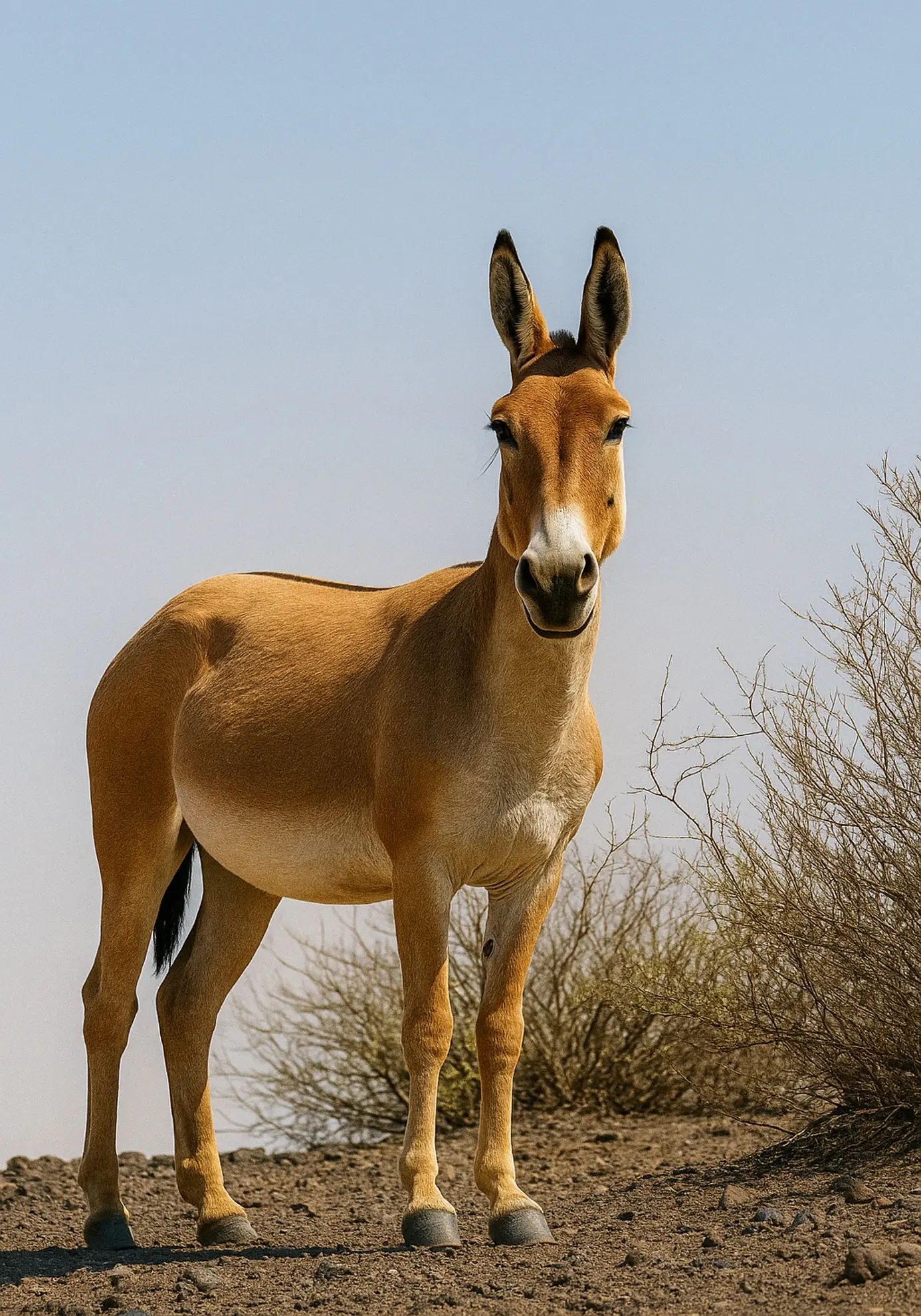
With a strong body, long legs, and great speed, it is well adapted to dry, desert environments. Its coat is usually light brown to cream, with darker bands on the legs and shoulders.
It lives mostly in open plains and sparsely vegetated areas and travels long distances to find water and food, feeding on desert grasses and plants. The Persian onager usually lives in groups and shows interesting social behavior. Protecting this valuable species plays an important role in preserving biodiversity and the natural balance of desert ecosystems.
Characteristics
- Body color
- Usually light brown to cream with a dark stripe along the back; the belly and underparts are paler or white.
- Body size
- Body length usually between 200 and 210 cm.
- Height
- Shoulder height about 100 to 120 cm.
- Weight
- Usually between 200 and 260 kg.
- Lifespan
- About 20 to 25 years in the wild.
- Male & female
- Males are usually slightly larger and stronger and more competitive during the mating season.
- Way of life
- Usually lives in groups; herds often include several females and foals.
- Speed
- A very fast animal, running up to about 60 to 70 km/h.
- Diet
- Mainly grasses, desert plants, shrubs, and sometimes the leaves of bushes.
- Habitat
- Open plains, deserts, and semi-desert regions of Iran.
- Mating
- The breeding season is usually in spring and early summer.
- Gestation
- Gestation lasts about 11 to 12 months.
- Number of young
- Usually gives birth to a single foal.
- Call
- A loud, drawn-out bray used to communicate among members of the herd.
- Special trait
- Tolerates water scarcity and intense desert heat, traveling long distances to find water.
Gazelle of the Desert
Jebeer Gazelle
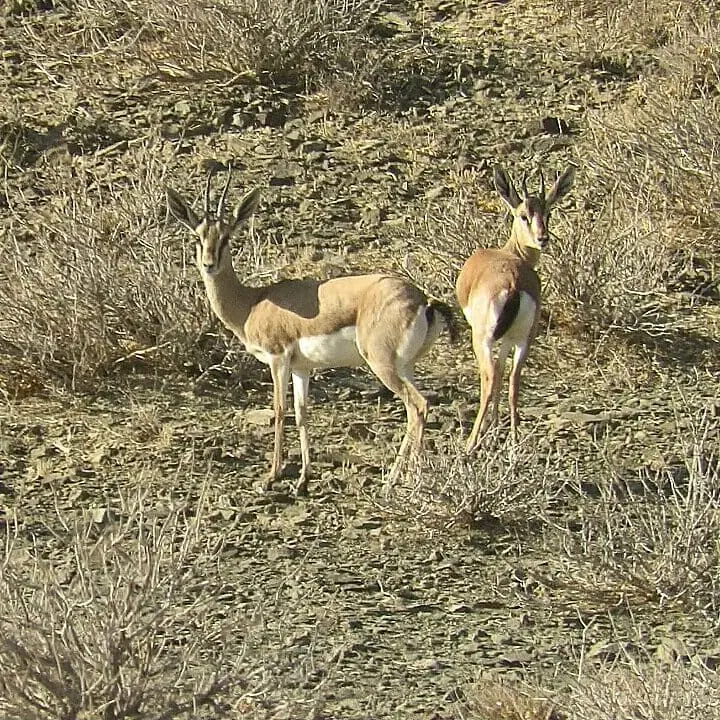
The Jebeer, or Iranian gazelle, is one of the most beautiful and delicate wild mammals of Iran.
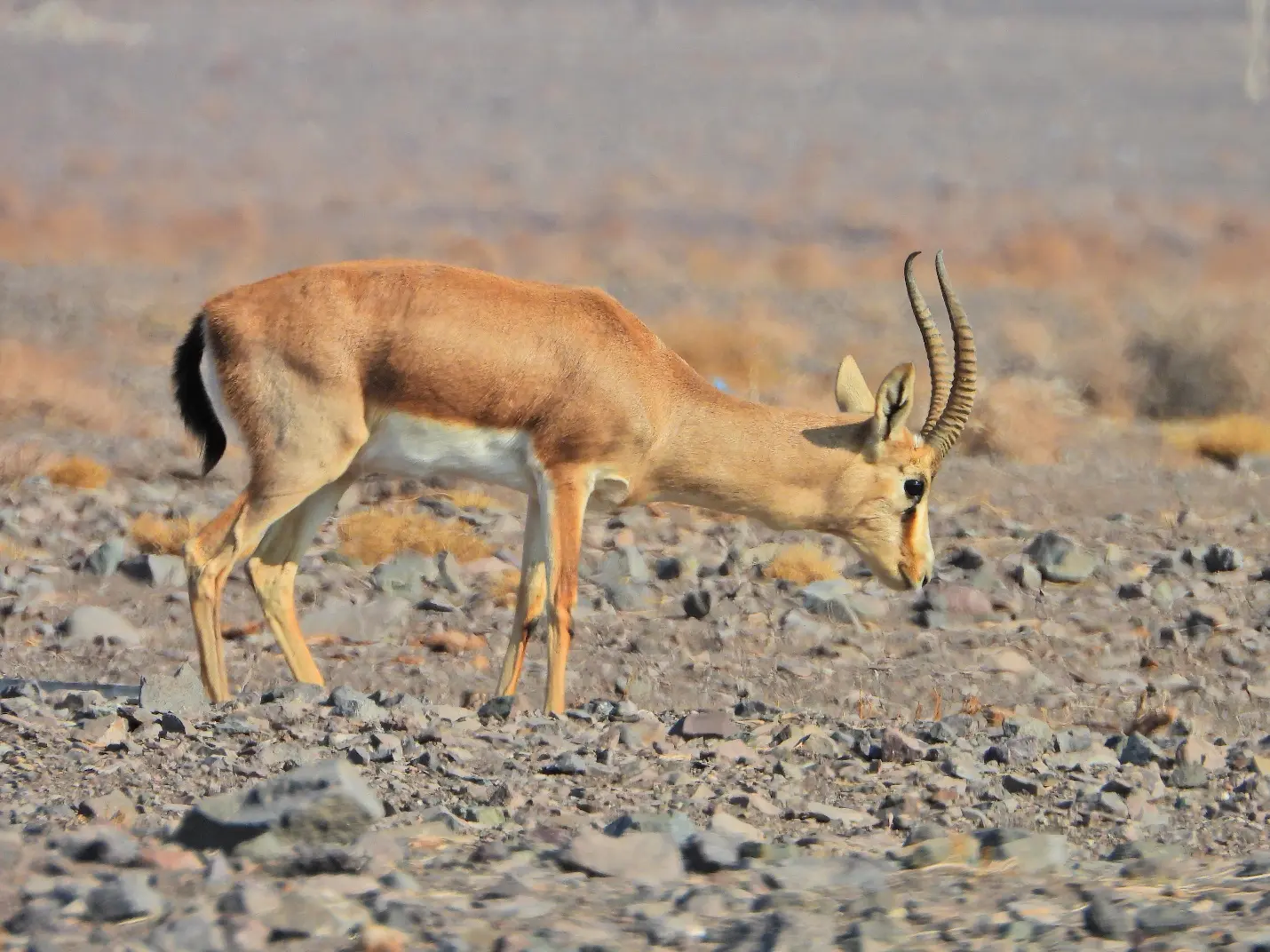
It lives in dry, desert, and semi-desert regions and is known for its slender build, large dark eyes, and ridged horns (in males). The Jebeer usually inhabits plains and low hills with little water and sparse vegetation, feeding on shrubs, grasses, and desert plants.
Around Qaleh Bala, suitable habitats — open plains and dry hills — provide good conditions for this species. Unfortunately, due to illegal hunting, habitat destruction, and drought, the Jebeer is considered a vulnerable and threatened species, and protecting this beautiful native animal requires special attention to habitat conservation and prevention of hunting in areas such as Qaleh Bala.
The Jebeer is a symbol of the beauty and resilience of Iran's desert wildlife, and protecting it in areas like Qaleh Bala is especially important.
Characteristics
- Body color
- Sandy light brown on the back and flanks for camouflage; white belly with a dark brown band along the flanks marking the boundary between light and dark.
- Body size
- Body length about 80 to 110 cm, shoulder height about 60 to 70 cm.
- Weight
- Usually between 20 and 30 kg; males are slightly heavier than females.
- Tail length
- A short tail, about 15 to 20 cm, usually held upright while running.
- Lifespan
- About 10 to 12 years in the wild, up to 15 years in captivity.
- Male & female
- Males have long, ridged, ringed horns; females have no horns or only very short, slender ones. Males are slightly larger.
- Movement
- One of Iran's fastest mammals, running up to about 65 km/h; escapes predators with long, zig-zag leaps.
- Diet
- Grasses, desert shrubs, thorny plants, roots, and occasionally small wild fruits; it draws much of its water from these plants.
- Mating
- The breeding season is usually in late autumn and early winter, when males clash horns to attract females.
- Birth
- After about 5 to 6 months of gestation, the female usually gives birth to one (rarely two) young, able to walk within hours of birth.
- Call
- Short, sharp snorts through the nose to warn the herd; young make a weak bleating sound to reach the mother.
- Habitat
- Desert and semi-desert regions of Iran — open plains and dry hills with scattered vegetation, including around Qaleh Bala.
- Special trait
- One of the most desert-adapted mammals, able to survive for days without direct access to water.
- Role in nature
- A key herbivore in the desert food web and the main prey of predators such as cheetah, wolf, and eagle.
Icon of the Mountains
Urial Wild Sheep
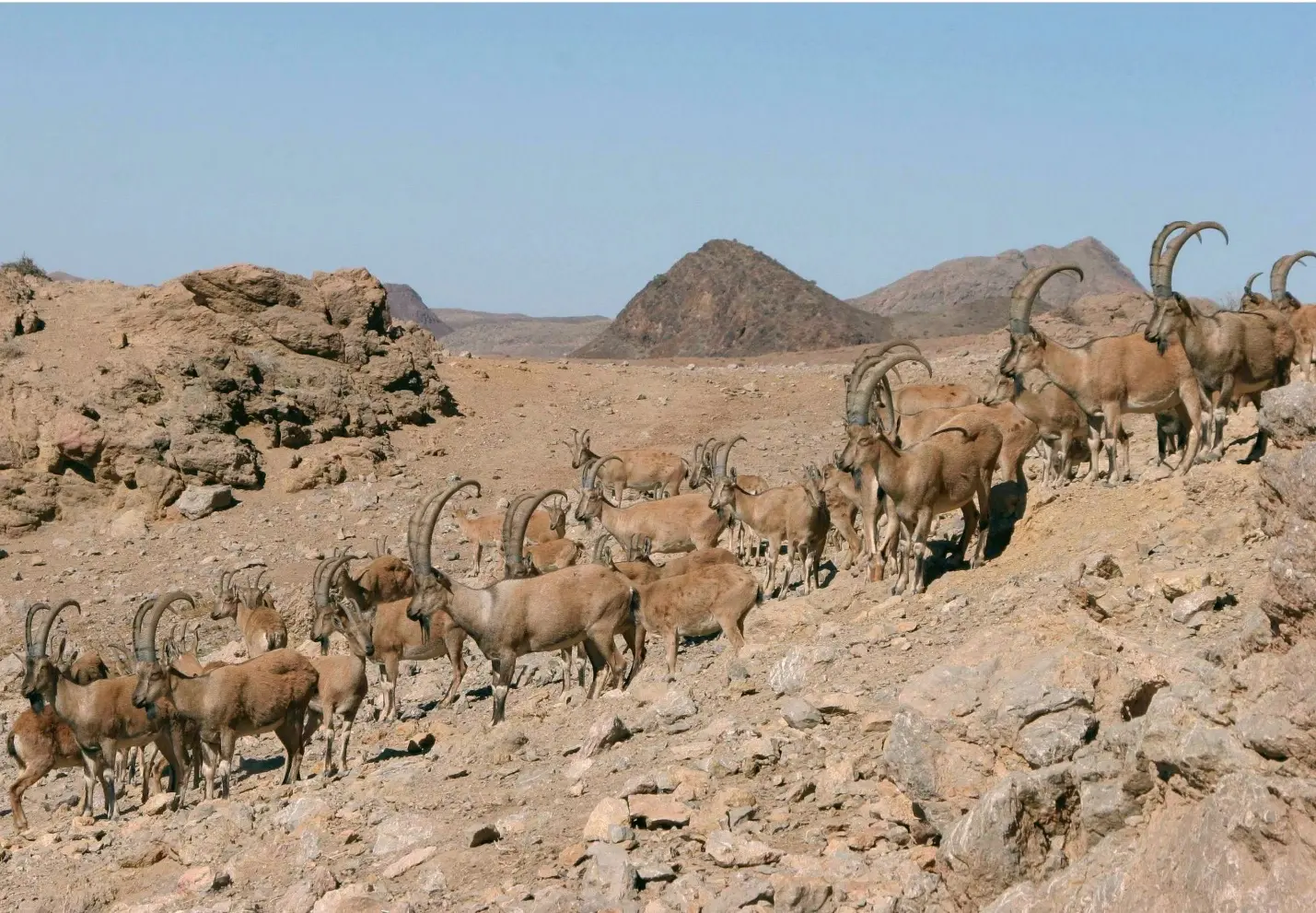
The Urial is one of the most beautiful and majestic mountain mammals of Iran and is also found around Qaleh Bala.
Males are known for their large, curved, ringed horns, which can sometimes exceed 80 cm. The coat is grayish-brown with a white belly and a dark mane that appears on the necks of males in the cold season.
It lives on rocky slopes, dry hills, and semi-desert mountains, feeding on grasses, shrubs, and mountain plants. Because of over-hunting, habitat destruction, and recurring droughts, the Urial faces serious threats and is considered a vulnerable species; protecting it in areas like Qaleh Bala plays an important role in preserving biodiversity and the balance of Iran's mountain ecosystems.
With its magnificent horns, the Urial is a symbol of strength, beauty, and resilience in the mountains of Iran.
Characteristics
- Body color
- Grayish-brown on the back and flanks, darker in winter; white belly. Males have a dark mane from neck to chest, more prominent in cold weather.
- Body size
- Body length about 120 to 150 cm, shoulder height about 80 to 100 cm.
- Weight
- Males usually 50 to 90 kg, females 35 to 55 kg; males are noticeably larger and heavier.
- Tail length
- A short tail, about 10 to 15 cm.
- Lifespan
- About 12 to 15 years in the wild, up to 18 years in captivity.
- Male & female
- Males have large, curved, ringed horns (sometimes over 80 cm) and a dark mane; females have no horns or only small ones.
- Movement
- A skilled climber that scales steep, rocky slopes with agility, escaping predators with powerful, zig-zag leaps.
- Diet
- Grasses, mountain shrubs, thorny plants, leaves, and roots; in dry conditions it draws much of its water from plants.
- Mating
- The breeding season is in late autumn and early winter; males clash horns in fierce competition, audible from far away.
- Birth
- After about 5 months of gestation, the female usually gives birth to one or two lambs, able to walk within hours.
- Call
- Short and long bleats to communicate within the herd or warn of danger; males make deeper, harsher sounds when mating.
- Habitat
- Rocky slopes, dry hills, and semi-desert mountains of Iran, especially areas like Qaleh Bala with rock and scattered vegetation.
- Special trait
- One of the most skilled climbers in the animal world, able to move on nearly vertical slopes; the horns also aid balance.
- Role in nature
- An important mountain herbivore in the food web and the main prey of leopard, wolf, and golden eagle.