Back
Traditions, Arts, Rituals & Customs of Qaleh Bala

An ancient heritage from the heart of the desert, alive in the threads of the local community's art.

From needlework and weaving to votive dishes, oral tales, the stick dance, and rain-seeking rites, the living culture of Qaleh Bala is not a performance — it is the everyday language of a people who have safeguarded their heritage from one generation to the next.

Handicrafts made by the women of Qaleh Bala

Cultural Attractions of Qaleh Bala

Needlework and handicrafts of the women of Qaleh Bala
01

Handmade by the Village Women

Handicrafts

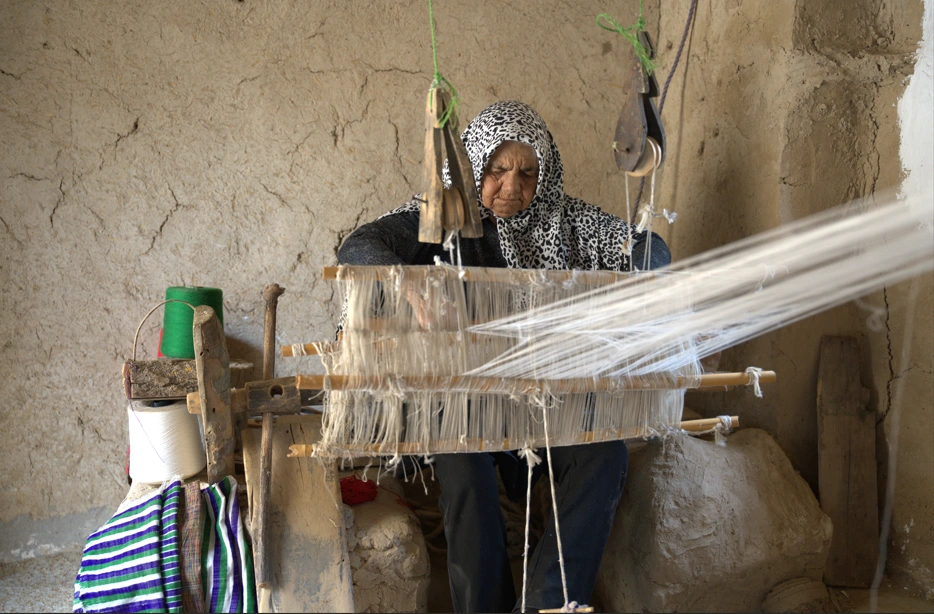
The handicrafts of Qaleh Bala include needlework, traditional clothing, hand-loom weaving (Tanebafi), and kilim weaving — arts passed from one generation of village women to the next.

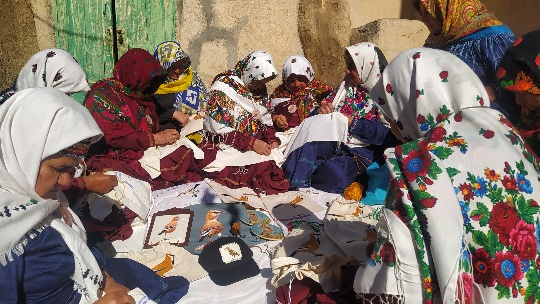
Needlework is one of the most authentic and delicate arts of the women of Qaleh Bala, inherited from past generations and still holding a special place among them. It not only displays their taste and creativity but also plays an important role in the family economy.

Using a variety of embroidery threads, the women create beautiful designs on traditional fabrics. Motifs drawn from nature, traditional patterns, and the region's cultural designs give these works a distinctive character. Beyond its artistic value, needlework is a source of income — many women here support their families and help preserve this valuable heritage by producing and selling embroidered goods.

An example of Qaleh Bala handicrafts
Handwoven and embroidered crafts of Qaleh Bala
02

The Village Table

Local Foods

Qaleh Bala's table is a blend of ceremonial dishes, rice dishes, thick soups, and local breads — each carrying a story of the region's culture and nature.

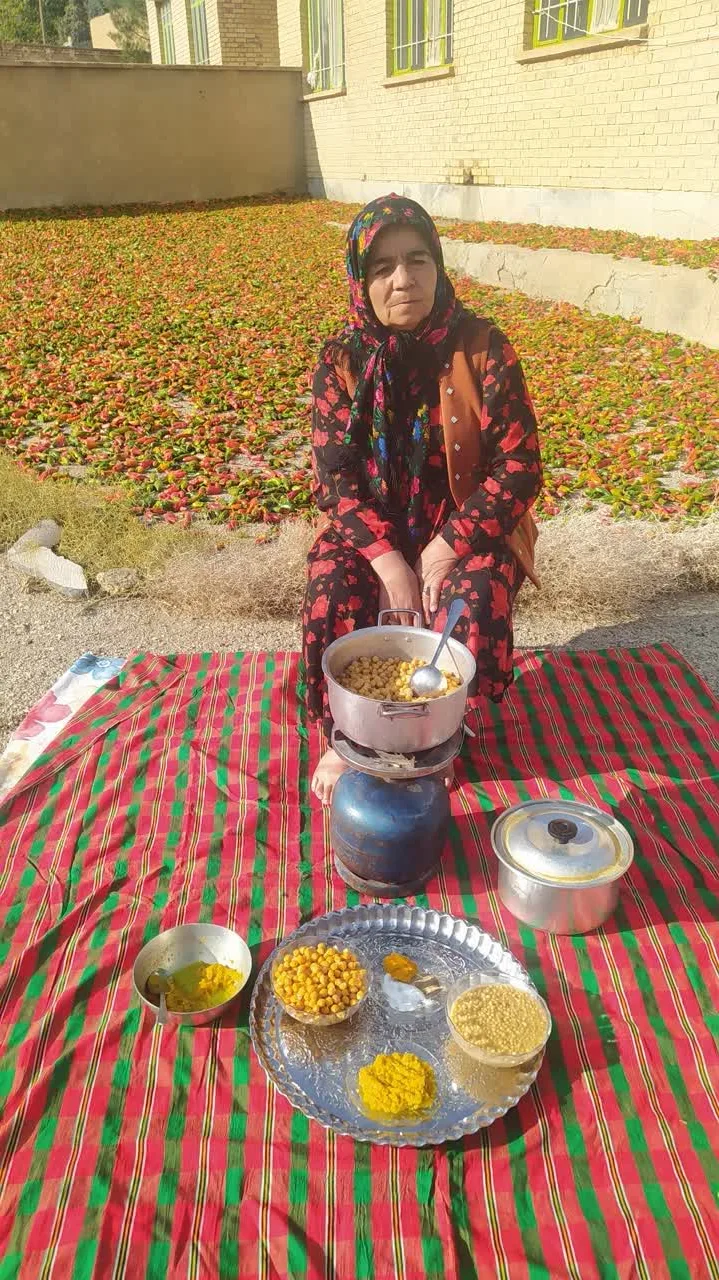
Dano, a traditional pottage of Qaleh Bala

Dano Pottage (Ash-e Dandani)

Dandani pottage, or "Dano," is one of the old traditional Iranian soups, usually cooked to celebrate a baby's first teeth. It can be served as an afternoon snack, a starter, or a full meal.

Made with nourishing legumes such as wheat and chickpeas, it is rich in fiber and protein — a healthy dish for the whole family that is often prepared as a small family ceremony and shared among relatives and friends.

Dano is registered in the national intangible heritage list (registration no. 3308, dated 1404/05/19).
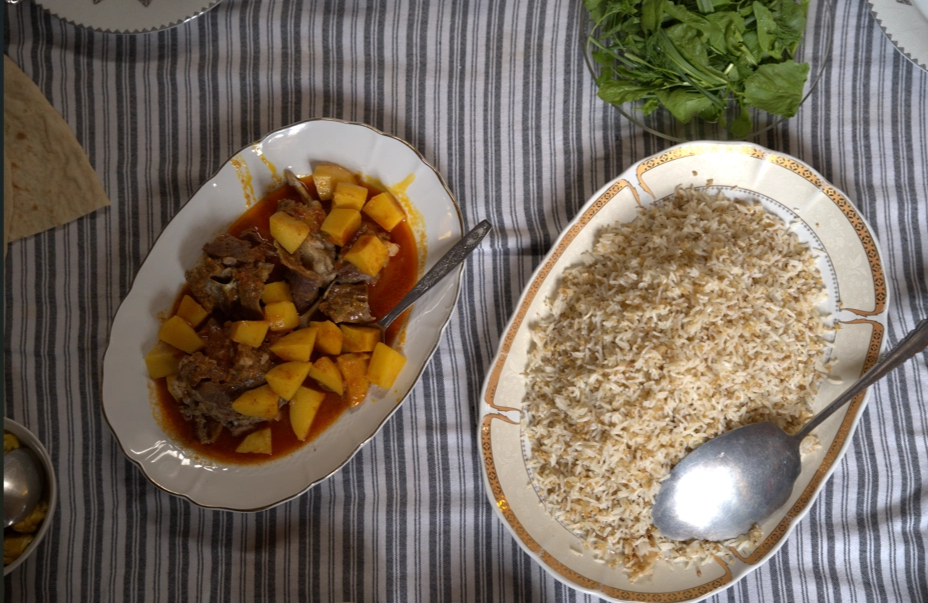
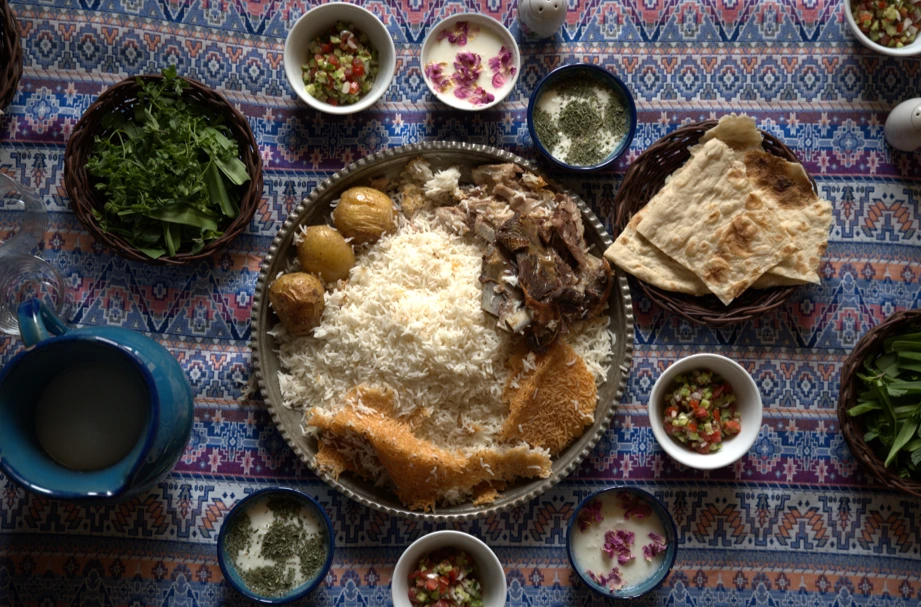
Gandom Polo, a traditional dish of Qaleh Bala

Gandom Polo (Wheat Rice)

Gandom Polo is one of the authentic traditional dishes of Qaleh Bala, rooted in the village's age-old culture and way of life. The pleasing blend of wheat and rice gives the meal a distinctive taste and reflects a clever use of local, nutritious ingredients.

It holds a special place at social and ceremonial gatherings and is usually cooked and served with local chelo-gusht — a combination that is as pleasing to the eye as to the palate and a hallmark of Qaleh Bala hospitality.

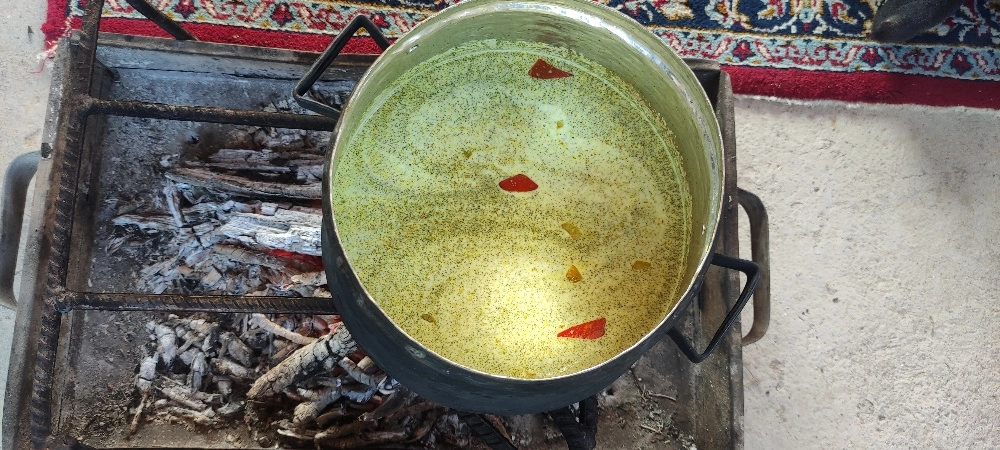
Digi, cooked in a copper pot over fire

Digi

Digi is a traditional dish of Qaleh Bala with a special place in family gatherings and communal rituals, especially on the thirteenth day of Nowruz (Nature Day). It is made from a simple mix of rice, meat, salt, and water in a copper pot.

Its cooking method is unique: the pot is set inside a fire pit, and embers are also placed on its lid so heat reaches the food evenly from both sides. The copper pot and the two-sided fire reflect the region's indigenous knowledge and traditional cooking skills.

Qoroti, a traditional dish of Qaleh Bala

Qoroti

Qoroti is a traditional dish that holds a special place on the villagers' table. It is cooked from a simple combination of kashk (dried whey), tomato, onion, mint, fried onion, and spices.

Despite its simplicity, it is hearty and delicious, and most eco-lodges prepare it for domestic and foreign visitors who are eager to taste this traditional food.

Rice Dishes (Polo)

  • Chelo-gusht Digi
  • Tahchin
  • Lubia Polo (green-bean rice)
  • Qabeli / tomato Dampokht
  • Dampokhtak with butternut squash
  • Dampokhtak with lentils
  • Black-eyed-bean rice
  • Zereshk Polo (barberry rice)
  • Mash Polo (mung-bean rice)
  • Gheymeh / Torkamani Polo
  • Barg Polo
  • Nokhod Polo (chickpea rice)
  • Kalleh Polo
  • Baghali Polo (broad-bean & dill rice)
  • Shevid Polo (dill rice)
  • Adas Polo (lentil rice)
  • Gazar / Zardak Polo
  • Havij Polo (carrot rice)

Thick Soups (Ash)

  • Ash-e Kashk
  • Ash-e Qara-Qoroot
  • Ash-e Gojeh (tomato)
  • Eshkeneh-ye Gojeh
  • Sholeh Qoroot
  • Kashk-e Bademjan
  • Sholeh Holbeh (fenugreek seed)
  • Mast-Joosh
  • Eshkeneh-ye Sichu
  • Eshkeneh-ye Kamarteh (unripe apricot)
  • Eshkeneh-ye Ghormeh
  • Eshkeneh-ye Anar (pomegranate)
  • Ash-e Hobubat (legume)
  • Ash-e Sholeh-Qalamkar
  • Ash-e Mast (yogurt)
  • Shurva
  • Kachi

Kuku (Frittata)

  • Kuku-ye Nokhod (chickpea)
  • Kabab Ghormeh
  • Kuku-ye Bademjan (eggplant)
  • Pumpkin Kuku
  • Zucchini Kuku

Local Breads

  • Nan-e Abi / Lavash
  • Fatir (yellow & sweet)
  • Sesame bread
  • Onion bread
  • Onion-crackling bread
  • Nan-e Qelifi
  • Koluche
  • Nan-e Ajar (a wild edible plant)
  • Gulach
  • Turmeric bread (baked mainly for Ashura)
  • Nan-e Roghani (buttered bread)
03

Age-Old Pastimes

Traditional Local Games

The traditional games of Qaleh Bala are part of the collective memory and the pastimes of past generations, still kept alive today.

  • Tileh / Tisheleh (marbles)
  • Gerdu-bazi (walnut game)
  • Hara / Zu-bazi
  • Chub-kul-su (Alak-Dolak / tipcat)
  • Sang-be-do (Yeh-Qol-Doqol / knucklebones)
  • Lepar-bazi
  • Galleh-bazi
  • Gol-ya-Puch (guess the hand)
  • Haft-Sang (seven stones)
04

Intangible Heritage

Oral Literature

Chants, melodies, local songs, lullabies, folk tales, proverbs, and riddles are part of the oral literature and intangible heritage of Qaleh Bala, passed down by word of mouth.

  • Chants and melodies
  • Local songs
  • Lullabies
  • Folk tales
  • Proverbs
  • Riddles (matal)
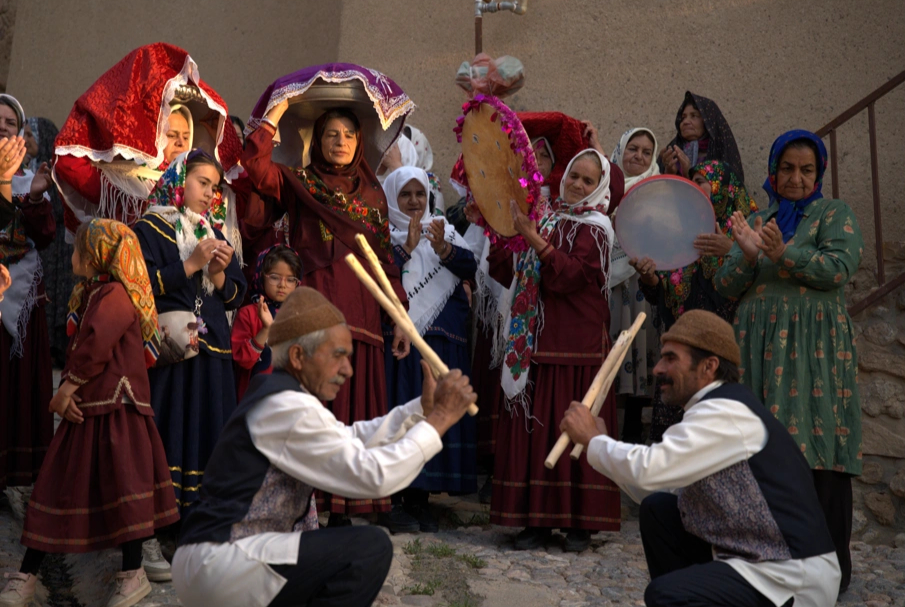
The men's stick dance of Qaleh Bala village
05

Performative Ritual

The Stick Dance

The men's stick dance of Qaleh Bala is one of the region's ancient performative rituals, performed with coordinated movements, local rhythm, and symbolic sticks.

This traditional dance introduces visitors to the solidarity, collective strength, and native culture of the village, and is a living part of Qaleh Bala's intangible heritage.

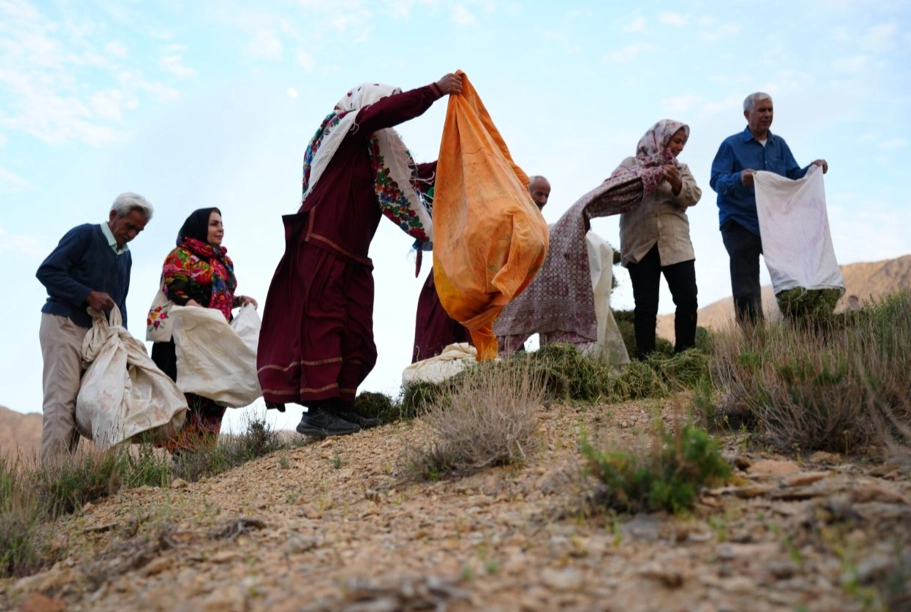
The forage vow ceremony for wildlife around Qaleh Bala
06

Environmental Ritual

The Forage Vow for Wildlife

The forage vow in Qaleh Bala is an environmental, community ritual aimed at supporting wildlife, especially during low-rainfall seasons.

Through this valuable tradition, the villagers gather and donate forage to help protect the animal species of the Touran region, playing an important role in a culture of nature conservation.

The Tal and Mahtal rain-seeking ceremony in Qaleh Bala
07

Rain Seeking

The Tal and Mahtal Ceremony

The Tal and Mahtal ritual is one of the oldest beliefs of the people of Qaleh Bala for seeking rain and blessing — a rite held by singing local melodies and gathering in the heart of nature.

It is a symbol of the people's deep bond with the earth, the sky, and natural cycles, and is still honored as a living part of the village's cultural identity. The presence of different generations makes it an occasion for social solidarity and the transfer of spiritual heritage.

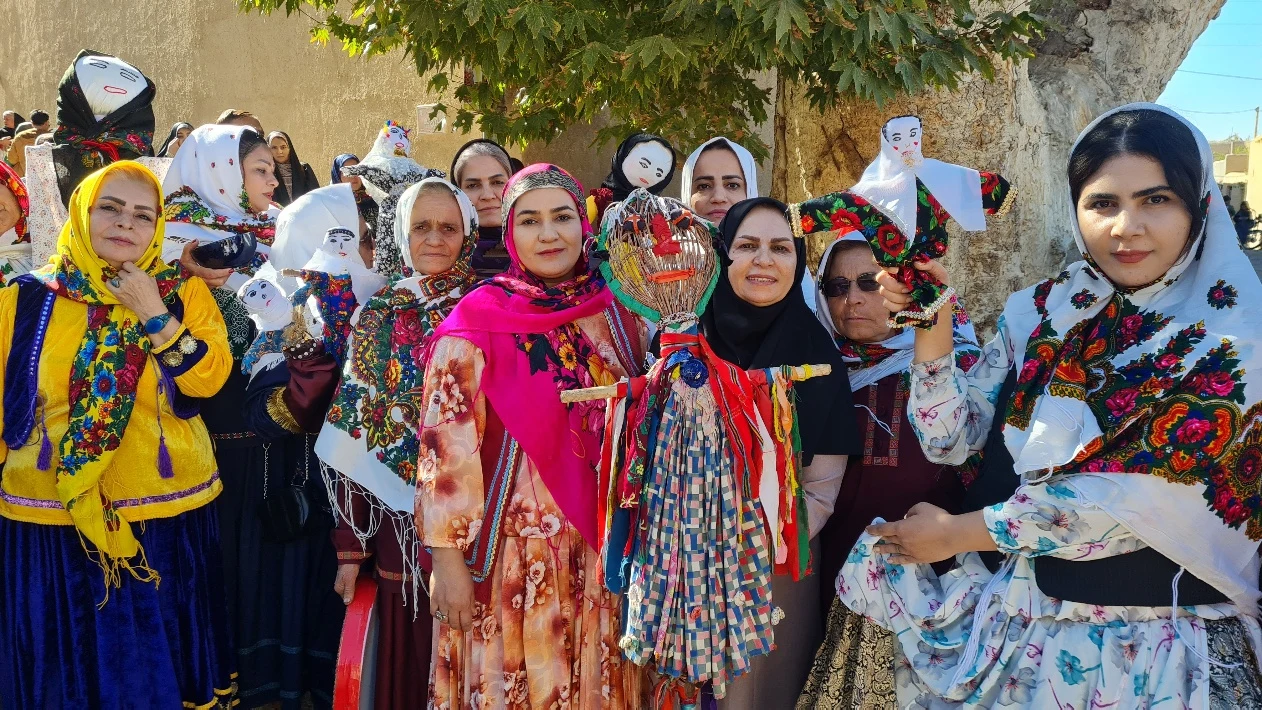
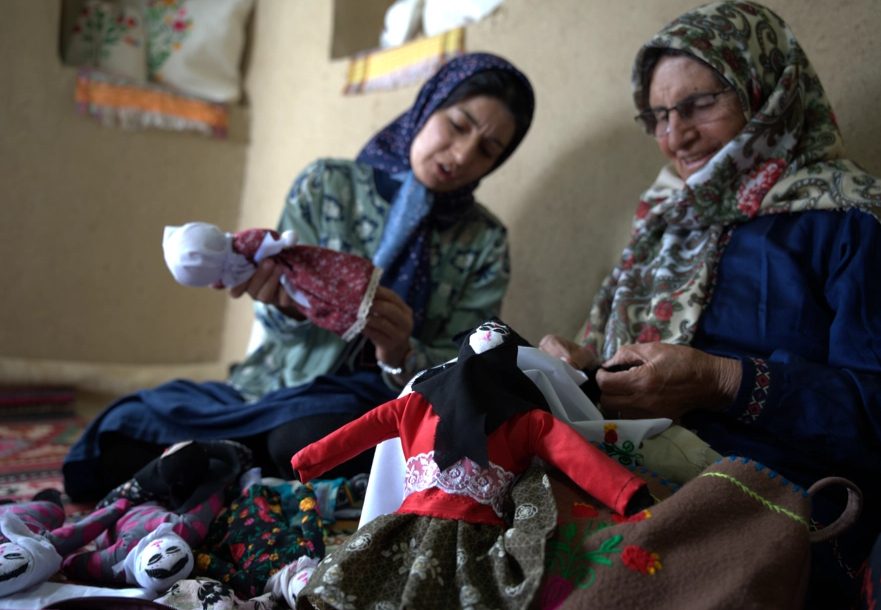
The rain doll, a ritual handicraft of the women of Qaleh Bala
08

A Ritual Handicraft

The Rain Doll

In the "Tal and Mahtal" rain-seeking ritual, the rain doll is made from two sticks in a plus shape — a long stick for the body and a short one for the arms.

Over this wooden frame, a gathered dress of floral fabric is draped, and the head and face are shaped from white cloth and cotton, then embroidered with colorful threads. Finally, a floral headscarf is tied on the doll and its hair is made from black wool.

The village women hold this doll during the ceremony and, by chanting ritual prayers, ask for rain.