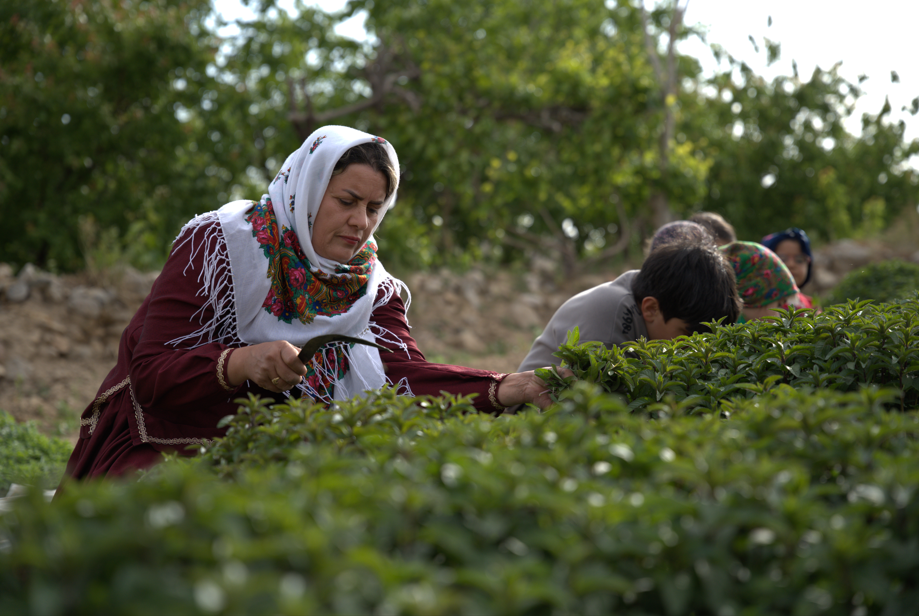
Qaleh Bala — where the mountain meets the desert.
On the arid edge of Touran, Qaleh Bala keeps a rare green world alive: a plane tree roughly 700 years old, orchards fed by springs and qanats, and fields of low-water crops that reveal how skillfully the village farms right beside the desert.
Natural Attractions
A Living Landmark
The Ancient Plane Tree
The Oriental plane (Platanus orientalis) is a broad-leaved, deciduous tree that has been admired in Iran since ancient times for its unique aesthetic qualities — especially the distinctive form of its leaves and the bright, characteristic color of its bark — and has long been widely used in green spaces and landscaping. In favorable conditions, it can grow to more than 50 meters tall.
Around Shahrud and its surrounding villages, the plane tree has always held a special place among nature lovers. Signs of this historical importance can be seen in the many ancient specimens — particularly beside mosques, along the edges of covered bazaars, in the old fabric of the neighborhoods, and next to the city's historic watercourses.
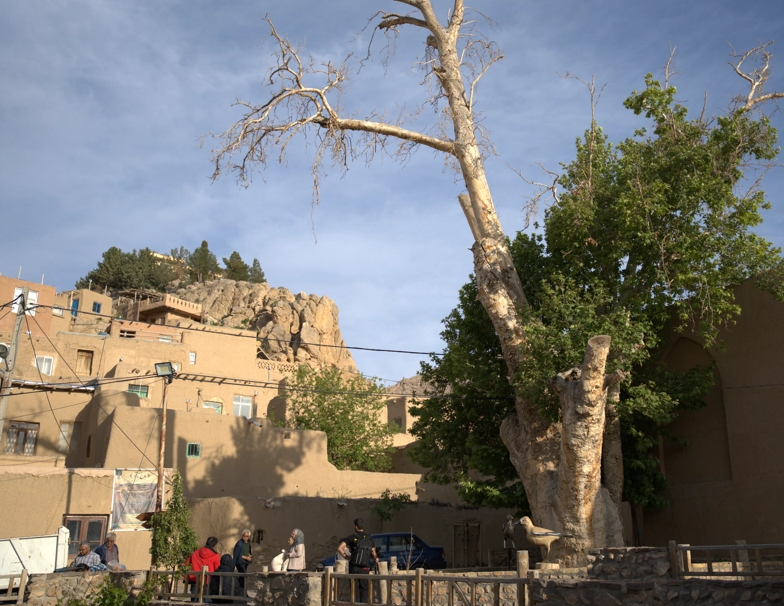
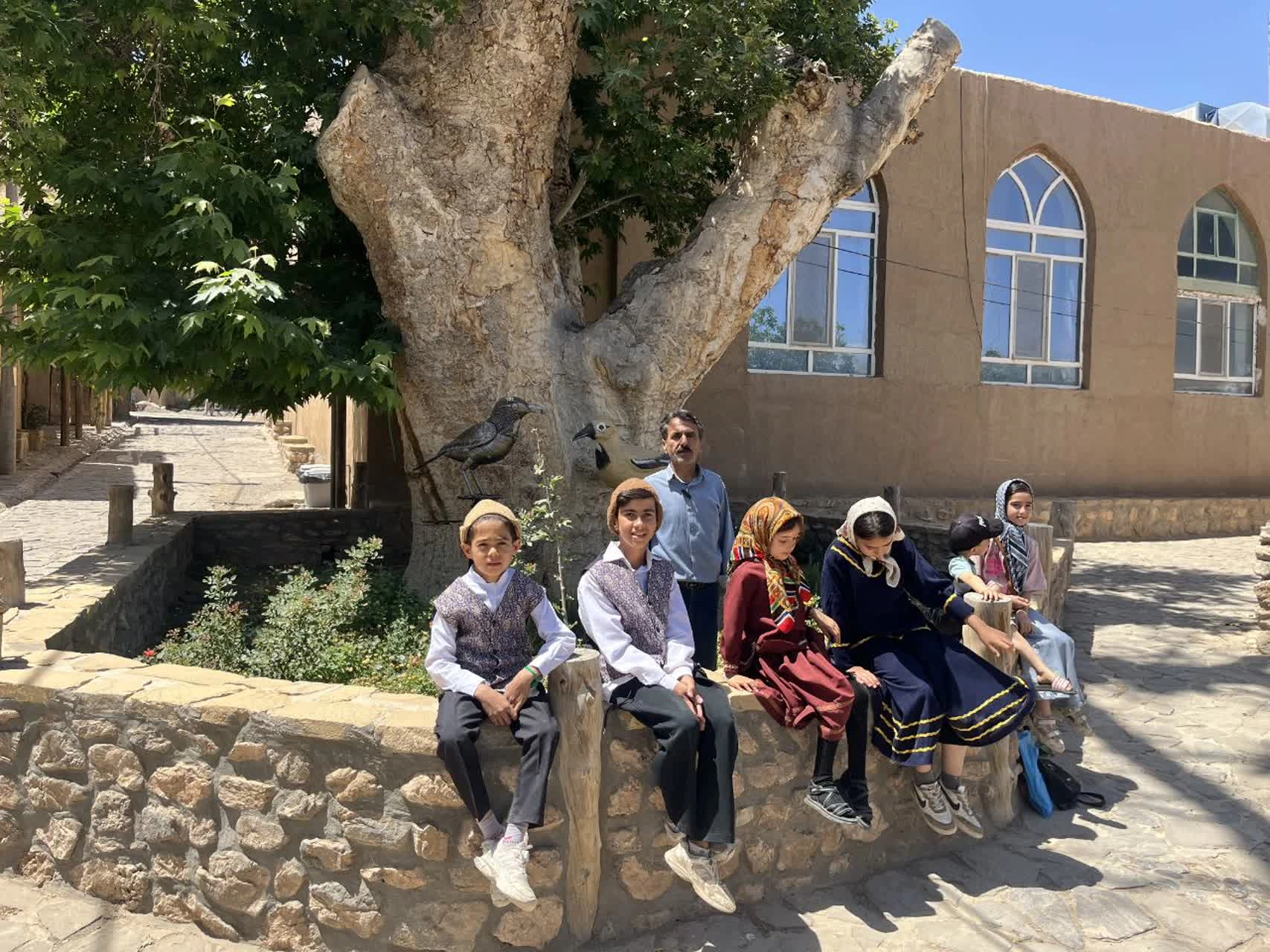
The plane trees of Qaleh Bala, located in the village of Qaleh Bala in the Biarjmand district, are among the region's most notable ancient trees and are especially valued by the villagers. One of them is known as "Pa-Chenar-e Pa'in," standing just past the village entrance and the residential area. Another ancient plane tree stands near the qanat outlet, the bathhouse, the mosque, and the precious historic core of Qaleh Bala.
This magnificent plane tree has shaded the life of the people for many generations and tells the story of countless ups and downs. Estimated to be around 700 years old, it is one of the most prominent natural, identity-defining elements of the village and has always been a symbol of endurance, greenery, and the bond between people and the desert climate.
Its massive, spreading trunk and the wide shade it offers in the hot months have made it a beloved place for rest, gatherings, and a stop for travelers. Despite the village sitting in the dry climate of the desert foothills, the Qaleh Bala plane tree stands like a green jewel in the heart of nature, a reminder of water, life, and the passage of time.
This plane tree is not merely a natural feature; it is an inseparable part of the history and collective memory of the village — so much so that every passer-by who sees it truly feels the real meaning of "ancientness" and "endurance."
Spring-Fed Orchards
The Lush Gardens of Qaleh Bala
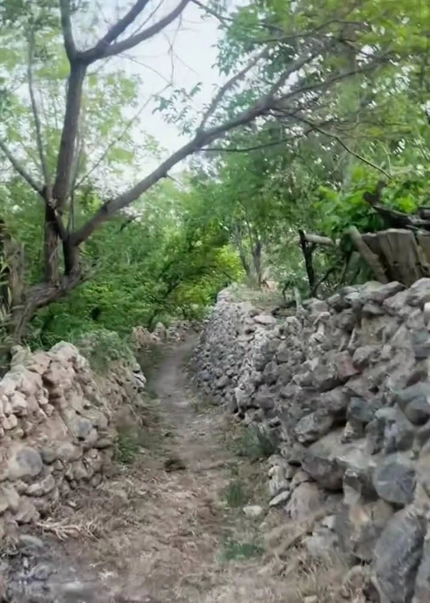
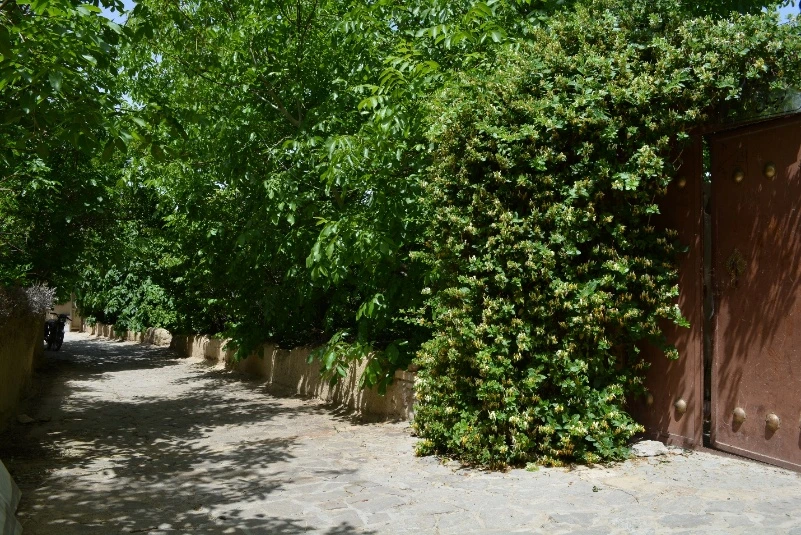
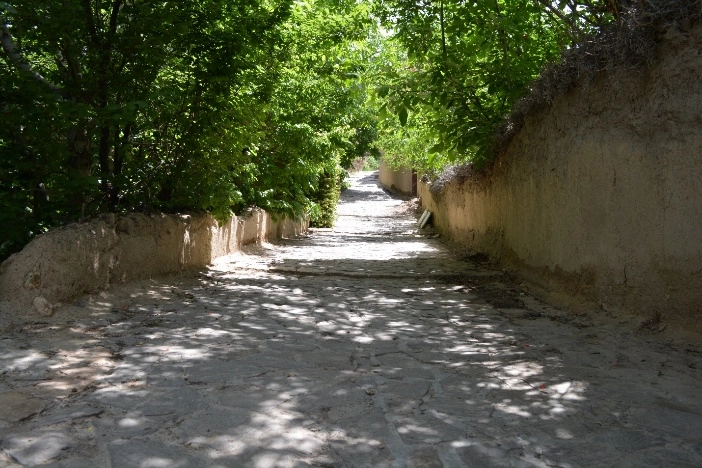
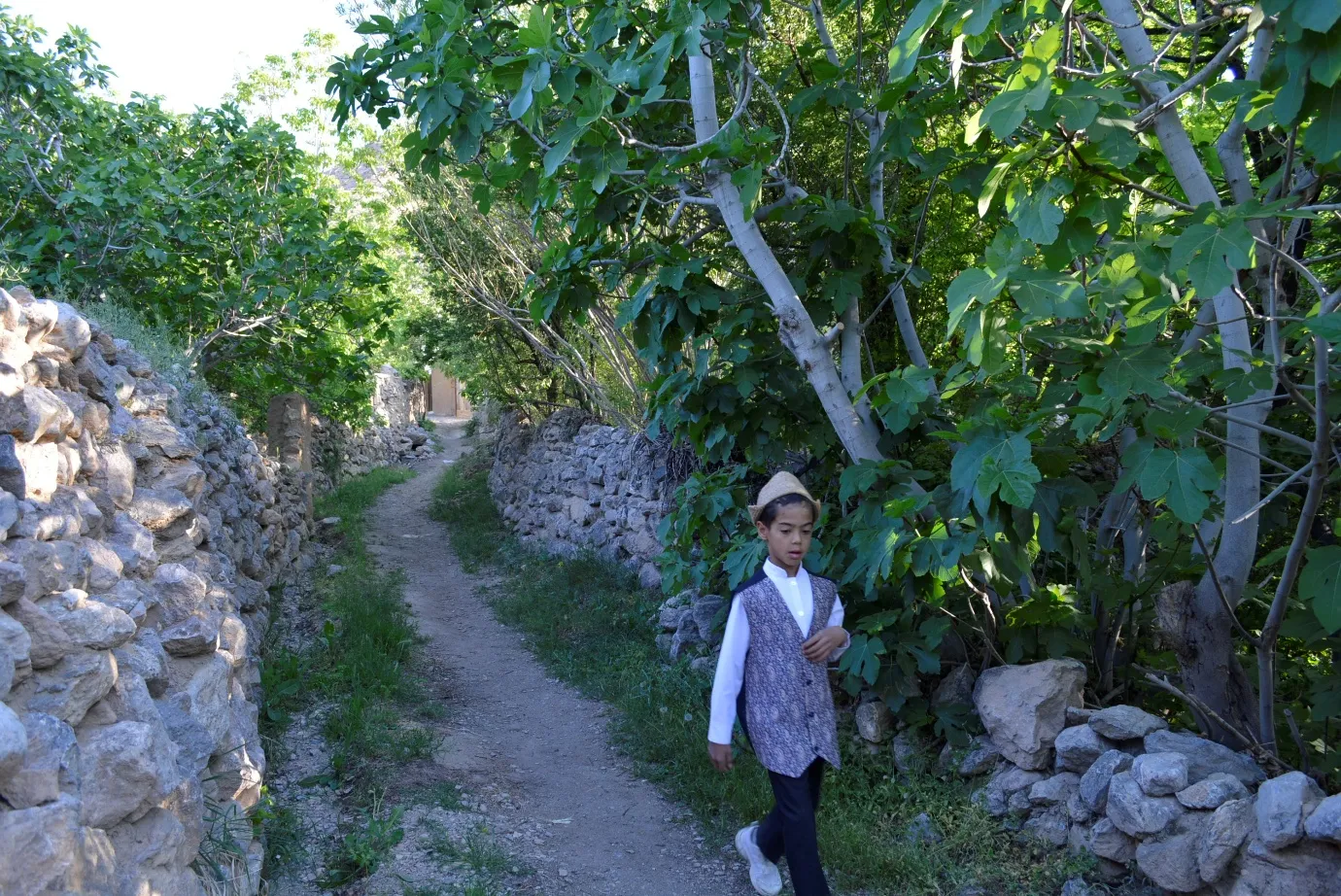
At the edge of the village, broad green gardens create a rare portrait of freshness and life right beside the desert. Watered mainly by mountain springs and qanats, these gardens are home to abundant fruit trees such as pomegranate, quince, almond, apricot, apple, and mulberry.
Together, these trees create a colorful, four-season landscape that softens the village air and turns its walking paths into an unforgettable experience. Strolling through these gardens — accompanied by the sound of flowing water, the scent of fresh leaves, and the shade of fruit trees — gives visitors a deep sense of calm and stillness.
Beyond their economic importance, the gardens of Qaleh Bala shape the aesthetic and cultural identity of the village and are among the main attractions of this desert settlement.
These gardens are a symbol of human harmony with nature and the intelligent use of water resources in an arid region — a place where greenery growing beside the desert sands creates a delightful, exceptional contrast.
Low-Water Farming
The Village's Agricultural Products
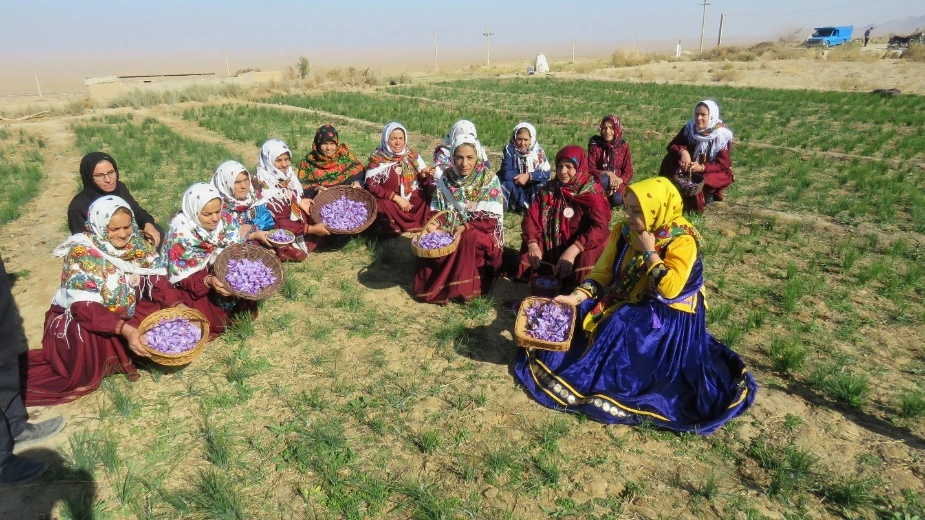
The main focus of this village's farmland is on growing low-water-demand crops — an approach well suited to the region's climate and available water resources. Among the low-water crops widely cultivated here are:
- Saffron
- Borage
- Peppermint
- Lemon balm (Melissa officinalis)
- Thyme
- Barley and wheat
- Tarragon
- Wormwood (sagebrush)
- Fumitory
- Camelthorn
- Flixweed (Descurainia sophia)
In addition to these medicinal and industrial plants, other crops are also grown in the village's fields. Although they need more water than the first group, they still play an important economic role in farmers' livelihoods. They include:
- Garlic
- Persian shallot
- Tomato
- Various vegetables
- Chickpea
The diversity of the cropping pattern in this village both meets market demand and reflects the farmers' ability to manage resources efficiently and adapt to environmental conditions.