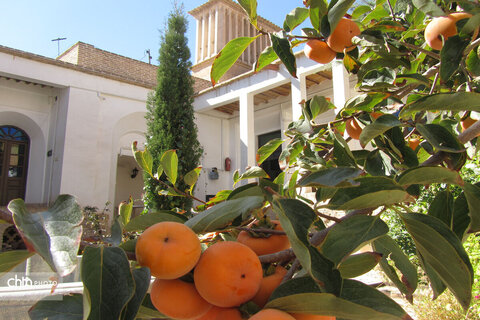
Shahroud County, A Small Continent / From Farahzad Tash and Haft-Rang Spring to Olang Forest
Shahroud County is a region of unparalleled natural and historical diversity, known as Iran's "Small Continent." It features wildlife shelters, world heritage forests, stunning deserts, and valuable historical sites, making it a captivating destination for Nowruz travelers. The tourist village of Qaleh Bala and the Geyoor-Dezian tourist axis are highlighted, with historical structures like a water mill and bathhouse in the vicinity. ...
Miras Arya: Shahroud County, as one of the largest counties in Semnan Province, hosts the largest wildlife shelters and protected areas. Including the existing no-hunting zones, it is known as the "Small Continent" and the "Land of Five Climates." The climatic diversity of Shahroud County is so evident that the shortest distance from desert to forest is found in this county. By traveling a short distance of about 45 kilometers north from Shahroud, we reach the Hyrkanian forests of Abr with the most beautiful landscapes, and by traveling the same distance south, we reach the desert and the beauties of the Chah Jam region, and finally Taroud and its date palm groves, where the people of that region are engaged in camel husbandry.
This climatic diversity, alongside the diversity of ethnic and linguistic groups, has created unique features and potential for tourism development in this county. Shahroud, situated between the Tehran-Mashhad route and adjacent to the central and northern provinces of the country, is recognized as one of Iran's ecotourism centers. This county possesses unique capabilities in various fields of tourism, including historical, spiritual, and natural tourism.
Historical Antiquity
Within the expanse of Shahroud County, there are historical hills with very ancient origins. Among these are the Deh Kheyr historical hill in Bastam district, dating back to the 8th millennium BC (10,000 years ago), the "Sang-e Chakhmagh" hill in Bastam, dating back to the 5th to 7th millennium BC, the Khorian hill, and others. The historical depth of settlement in the Shahroud region, based on archaeologists' speculations and excavations, reaches back to a thousand years before the Common Era. Artifacts recovered from excavations at the historical hills of Shahroud attest to this claim. Based on existing historical evidence and documents, the initial core of Shahroud city was built on low hills in the northern and western foothills of Shahroud for defense against invaders, and it gradually grew and developed with the establishment of security. According to some historical references in texts and some archaeological and architectural evidence inside and outside the current city, the route of caravans traveling the East-West highway (Silk Road) passed through Shahroud. Simultaneously, the presence of a post station and caravanserais turned Shahroud into one of the important settlement centers in the region. Accordingly, the oldest surviving structure in Shahroud city is attributed to the Ilkhanid period.
Handicrafts
Felt making in the village of Abrasj, weaving of Gelich, Jajim, and Chogha (a type of woolen fabric) in Majn city, wood carving, making traditional musical instruments, Kilim weaving, semi-precious stone carving, ceramic art in Shahroud and Abrasj, Shahroud pottery, carpet painting, tile mosaic, wood turning (an old technique of Shahroud city), and traditional embroidery are recognized as active fields in this domain. The ceramic industry of this city is of particular importance. Other handicrafts of the county include traditional handwoven textiles from Kalateh Khij city, broom making by women in Taroud village, and needlework by women in the Khartouran desert region. Kalateh Khij city was also registered as the National City of Traditional Handwoven Textiles last year.
Souvenirs
The most important souvenirs of Shahroud include Qaisi (dried apricots), apricot kernels, Nogh (nougat) and candies, various local breads, and grapes, which are exported due to their quality and variety.
Historical Sites and Tourist Attractions
Museum of Shahroud
The building of the Shahroud Museum was constructed in 1306-1307 AH (1927-1928 AD) as the municipality building. This building is registered under number 1888 in the list of Iran's National Heritage. After renovation and restoration, this building began its activities for visitors and researchers in February 1989. The museum houses a collection of historical and cultural artifacts, archaeology, and ethnography. The museum building is constructed in the architectural style of the late Qajar and early Pahlavi periods. The Shahroud Museum is a provincial museum, and therefore, efforts have been made to keep the objects and artifacts of each section separate and on display for visitors. The archaeology section of the museum is on the ground floor and includes four rooms and a corridor, containing artifacts from before the Common Era, the prehistoric period, Islamic period artifacts, and more.
The ethnography section of this museum includes tools for production and crafts, animal husbandry, agriculture, clothing, bread-making techniques, jewelry, handwoven items, deeds and documents, tools and equipment for Ta'zieh (passion play) performance, traditional medicine, and images of people's activities and lives, all gathered from various villages. In the clothing section of the Shahroud Museum, various women's garments are displayed, including the women's coat (Kalleh), shaliteh (skirt), embroidered hats, charghad (headscarf), woolen socks, and embroidered shirts. Among the Ta'zieh performance tools and equipment in this section are Jushan (armor), Sepa (shield), Kolahkhod (helmet), etc. Among the beautiful images in this section is a Darvish curtain with 32 illustrated stories and 400 human and animal figures, painted in oil in 1961 AD in Kashmar.
Bastam Historical Complex
This valuable complex includes artifacts from the 3rd century AH (9th century AD) onwards and is located next to the tomb of "Abu Yazid Tayfur bin Isa bin Surushan Bastami," known as Sultan al-Arifin, one of Iran's renowned mystics of the 3rd century AH. The distinguishing features of this complex are the presence of 17 adjacent buildings with different historical periods (8 periods): Atiq (early 3rd century AH), Buyid, Seljuk, Ilkhanid, Timurid, Safavid, Qajar, and Pahlavi. The first building, dating back to the lifetime of Bayazid Bastami, is a small mosque beneath the second mosque of Bayazid and next to the tomb of Imamzadeh Mohammad (AS). The Bayazid Bastami complex includes the Bayazid Khanaqah (Sufi lodge), Safavid portico, Bastam Minaret, Bayazid Bastami Mosque, Bastam Grand Mosque, Imamzadeh Mohammad, Kashaneh Tower, Ghazan Khan Dome, Shahrkhiya School, and more.
The Grand Mosque is located south of the Bastam historical complex and is a construction of Ghazan Khan. This building was constructed between 700 and 706 AH (1300-1306 AD). Its prayer halls are built in the western and northern parts, and in the Qajar era, the eastern prayer hall is annexed to the mosque.
The Kashaneh Tower was built simultaneously with the Grand Mosque in the southeastern part, connected to it as a tower and a tomb. Ghazan Khan bequeathed it to his son, and there is no grave in its crypt. Its height is 20 meters from the inside and 24 meters from the outside. Its geometric shape is decagonal from the inside and thirty-sided with fins from the outside, perpendicular to each other. On its entrance portal, the date of mid-Shawwal, year 700 AH, and the name Muhammad bin Ahmad Semnani are inscribed, and stucco decorations are visible on both sides of the door.
The Bastam historical complex is registered in the list of Islamic World Heritage.
Shrine of Sheikh Abul Hassan Kharaghani
Ali bin Ja'far or Ali bin Ahmad Kharaghani was one of the great Sufi masters. He was born in Kharqan and passed away in the same region. The current building of the shrine was constructed by the National Heritage Society and is adorned with bricks and tile decorations. What remains of the ancient shrine is its beautiful mihrab, decorated with exquisite stucco work. This mihrab is located in the southwest of the building. The Sheikh Abul Hassan Kharaghani complex includes a library, accommodation suites, and recreational areas. The shrine building of this renowned mystic of the 4th and 5th centuries AH is located 24 kilometers north of Shahroud County in the village of Qaleh Now Kharaghani.
Abr International Forest
The Abr region is located 40 kilometers northeast of Shahroud County. This area, known as the Abr forests, has meadows or wooded pastures at its higher altitudes and forests with diverse species at lower elevations. The Abr forest of Shahroud is Iran's second natural site on the World Heritage list after the Lut Desert and one of the most beautiful and pleasant forests in the world, located adjacent to the tourist village of Abr. It is known by this name because most of the time, the space of this forest is covered by a layer of clouds. To reach the forest, one must pass through the village of Abr.
Olang Forest
Olang Forest is located 85 kilometers north of Shahroud and in the northern watershed of the country. The most important landscape of the region is the presence of forests with a diverse combination of trees, which are particularly usable in spring and summer. The high-altitude forests, easy access to the forest environment, animal diversity, and diversity of forest tree species are important tourism advantages of this region.
Qatari Forest
The Qatari region in the Bastam district of Shahroud County is located between Olang Forest and Abr Forest. The best way to access it is from the road of the tourist village of Abr, in the direction of Imamzadeh Mohammad Saravin Qatari. Due to its location in a mountainous region, this area has a cold and temperate mountainous climate.
Majn and Dastan Gorge Waterfall
Majn city is located 35 kilometers northwest of Shahroud in a mountainous region. The famous Dastan Gorge is located 10 kilometers from Majn city and 45 kilometers from Shahroud. Due to the region's location in a mountainous area at an altitude of about 2,000 meters above sea level, the climate and weather are suitable for tourists in spring, summer, and early autumn.
Turan Biosphere Reserve
The Turan complex consists of three parts: National Park (8%), Wildlife Shelter (17%), and Protected Area (75%). This region is located south of the Tehran-Mashhad road, northeast of the Dasht-e Kavir (Central Desert), west of the Khartouran region, and east of the Taroud region. This complex is the second largest area protected by the Environmental Protection Organization after the Naybandan Wildlife Shelter. Khartouran is nicknamed the "Africa of Iran." This region is the second biosphere reserve in the world, located 140 kilometers southeast of Shahroud and 28 kilometers southeast of Biarjomand city, in the central north of Iran's desert.
Qaleh Bala Tourist Village and Geyoor-Dezian Tourist Axis
The tourist village of Qaleh Bala is located adjacent to the Turan Biosphere Reserve. This area is located southeast and 13 kilometers from Biarjomand city. The historical texture and terraced architecture of the village provide a basis for the presence of domestic and foreign tourists. ... The villages of Geyoor, Dezian, and Qaleh Ahmad are located in the vicinity of the tourist village of Qaleh Bala and the tourist axis, where valuable historical buildings such as a water mill, bathhouse, etc., can also be observed.
Khosh Yeylaq
The Khosh Yeylaq Wildlife Shelter is located northeast of Shahroud County. This region is among the first protected areas in Iran and has been designated as a wildlife shelter since 1985.
Farahzad Tash and Haft-Rang Spring
The Farahzad Tash region and Haft-Rang Spring are within the jurisdiction of Shahroud County and in the Central Alborz mountain range, north of the county. Due to abundant water and green pastures, agriculture and animal husbandry form the main occupation of the people. Haft-Rang Spring has been of interest to the local people since ancient times due to the beauty of its springs and its therapeutic properties. The name Farahzad is derived from the greenery of the region's farms and gardens, and the name Haft-Rang Spring is due to its springs, which appear in different colors as they pass through various minerals.
Taroud Region
The Taroud desert region of Shahroud, which hosts the largest date palm grove in northeastern Iran, along with the beautiful and scenic desert dunes of Chah Jam and the beautiful and scenic heights of the Pir-e Mardān tomb, displays another aspect of God's mighty power. This village is located 125 kilometers south of Shahroud County on the Shahroud-Me'mdan-Isfahan axis and in the Central Desert region of Iran. The presence of sand dunes (desert rames) in this region and its proximity to the Chah Jam region and the salt lake are among the natural tourist attractions of the county.
Reza Abad Tourist Village
The Reza Abad tourist region has rare animal species and unique flora. This region is located southeast of Biarjomand city and north of the Central Desert of Iran. Two rare natural attractions in this region are the desert dunes and the adjacent mountains, where the tourist village of Reza Abad, with its distinctive desert architecture (domed roofs), is situated between the dunes and the mountains.
Bazaar
The Shahroud Bazaar is one of the historical and large bazaars of the province, located in the center of Shahroud city. The history of this bazaar dates back to the Qajar period. Besides the main aisle, the Shahroud Bazaar has three souqs (market sections) and four crossroads, as well as several caravanserais, water reservoirs, bathhouses, and schools, and holds a special economic position in Shahroud.
Yaghmaeiha House
This house, a remnant of the beautiful old houses of Shahroud, is located on Tehran Street, 8th Shahrivar Street (Bahram), and was built in 1925 AD (early Pahlavi period). This building is unique in the county in terms of its traditional architectural features. The plan is centered around a courtyard, and the house entrance in the southern part is connected to the courtyard via a corridor (dalan). This historical house features a windcatcher, a pool house, guest rooms, an iwan (veranda), and a water reservoir.
Sheikh Ali Akbar Mosque
The Sheikh Ali Akbar Mosque of Shahroud is one of the most prominent historical buildings in Shahroud, dating back to the past and located on Shahid Sadoughi Street (Mazār). The history of this mosque dates back to the mid-Qajar era, during the reign of Nasser al-Din Shah. The founder of this mosque was the late Haj Sheikh Ali Akbar in 1274 AH (1857 AD). A distinctive feature of this mosque is the presence of four mihrabs in different parts, one in the dome chamber and the others in the prayer halls of the mosque.
Shahroud Grand Mosque
This building is a single-iwan mosque dating back to the Ilkhanid period. The mosque consists of several prayer halls. Its materials are raw mud bricks covered with straw-mud plaster and gypsum. The Shahroud Grand Mosque is notably simple and without ornamentation and is located opposite the historical fabric of Shahroud on Masjid-e Jame Street.
Zanjiri Tekyeh
The Zanjiri Tekyeh building consists of two parts: a renovated section and an old structure. This building is located north of Shahroud city in the old urban fabric. The remaining part of the old structure includes a central courtyard surrounded by numerous rooms on the ground floor. The courtyard has two entrances, north and south. The royal chambers are located a few steps above the first floor, above the northern and southern entrances. A metal chain, made of a special iron alloy, possibly from old ship anchors, is suspended between two plane trees and two metal bases. The roof covering the courtyard, an element of Tekyeh architecture from the Qajar era (Tekyeh Dowlat), is placed over the chain during mourning ceremonies.
Baranji Tekyeh and Water Museum
The Hosseiniyeh building is two-storied and symmetrically arranged on both sides of the courtyard. The entrance portal of the Hosseiniyeh remains in its old form and is architecturally significant. The entrance to the Hosseiniyeh consists of three arched corridors. The ceiling of the main corridor is architecturally important. The wooden doors of the corridors, especially the main door with its arched portals, have a special splendor. The specialized Water Museum has been established in this Hosseiniyeh through the efforts of the complex's custodian and is visited by enthusiasts.
With its natural and historical diversity, Shahroud has become one of Iran's most important tourist destinations. From the Hyrkanian forests to pristine deserts and historical sites dating back thousands of years, this county, due to its five different climates, offers an unparalleled experience of natural and cultural beauty in the heart of Iran. Therefore, Shahroud is an ideal destination not only for nature and ecotourism enthusiasts but also for those interested in Iran's history and culture. During Nowruz 1404 (2025 AD), Shahroud can be one of the best travel options, bringing unforgettable memories from this land full of beauty and history for tourists.
Report by Samaneh Soltanipour, Head of the Deputy of Handicrafts of the General Department of Cultural Heritage, Tourism, and Handicrafts of Semnan Province.