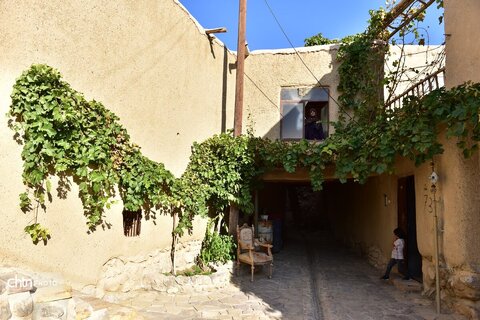
Semnan Province's Tourism Target Villages, Memorable Attractions
Semnan province, with its numerous natural and historical attractions, is one of the attractive destinations for domestic and foreign tourists. The target tourism villages of this province, with their cultural, linguistic, and natural diversity, offer unique opportunities to experience traditions, history, and pristine nature. The tomb of Sheikh Hassan Jouri, a cleric and leader of the Sarbadaran during the Ilkhanate period of the Mongols, is also located near this village. Qaleh Bala village...
The proximity to the capital, its location on the route of pilgrims to Mashhad, historical and natural attractions, and specific climatic conditions resulting from the northern areas being situated on the southern slopes of the Alborz mountains and other parts on the northern fringes of the Central Iranian Desert, are among the potential attractions of Semnan province for drawing domestic and foreign tourists.
However, one of the most significant tourist attractions of Semnan province is its villages, each possessing a distinct allure for enthusiasts of cultural heritage, nature, linguistics, traditional culture and rituals, anthropology, and more. With modest planning and investment in these areas, the province's economy can be transformed and revolutionized by attracting domestic and foreign tourists.
This report endeavors to briefly introduce a number of Semnan province's target tourism villages.
Padeh Village (Aradan)
This village is located 25 kilometers east of Garmsar city and three kilometers east of Aradan, south of the Tehran-Mashhad road. In the past, this village was one of the reputable villages of Khar (the old name for Garmsar), and its age dates back about six centuries. Gabri Castle and Imamzadeh Abu Sa'eed are structures within this village, while Aradan Bazaar, Imamzadeh Shah Nazar, and Imamzadeh Khalilollah are structures near the village. The language and dialect spoken by the villagers are Alikani, and the main agricultural products of this village include wheat, barley, cotton, melons, watermelons, figs, pomegranates, etc.
Tuyehvar Village (Amirabad Damghan)
Tuyehvar village is located 48 kilometers from Damghan city, north of Qushcheh village, amidst the northern mountains of Damghan. The people of this village speak the Mazandarani language, and the main agricultural products are walnuts, apples, grapes, wheat, barley, etc.
Animal husbandry is one of the occupations in this village, producing products such as yogurt, milk, butter, whey, and qorqorut. This village has a cold mountain climate with abundant rainfall in various seasons, creating a suitable environment. Consequently, the people of Damghan spend their hot summers in these villages. Baghistan Castle, Imamzadeh Mir Jibra'il, Zakaria Kalateh, Qelqel Spring, and ancient trees registered nationally are among the important attractions of this village.
Chashm Village (Shahmirzad)
Chashm village is located 25 kilometers north of Shahmirzad, adjacent to the mountains, with natural landscapes including the mountains of Nizva, Chapard, Bardar, Garam Dar, Aram, and Safidkuh. In the past, Chashm was called "Mircheshmeh" due to its numerous springs. The existence of rich pastures, abundant water, and fertile land were the primary reasons for the formation of this village. This village has a cold mountain climate with a long freezing period and very cool summers. Abundant water is one of its advantages, originating from Mircheshmeh and Sud Kalm. The watchtower, the shrine of Imamzadeh Abolqasem and Imamzadeh Mahdi, the shrine of the late Hajj Agha Seyyed Zain al-Abedin Nabavi and Agha Seyyed Suleiman Emadi, Bibi Pariz Khanum, and others are among the historical sites of this village.
Rashm Village (Damghan)
Rashm village is located 105 kilometers south of Damghan in the Sar-e Kavir region. The area of the village and its pastures is approximately 150 square kilometers. The village is situated amidst the Anar and Dezina mountains, which surround it from the north, northeast, and west, while the Dasht-e Kavir lies to its south and southeast. Due to its proximity to the mountains, this village enjoys a favorable climate and a green, pleasant atmosphere compared to neighboring villages, distinguishing it from desert villages. The presence of numerous springs in this village has boosted the cultivation of many agricultural products, and this village is inhabited by nomadic pastoralists. The old cemetery of the village, known as "Irraji," is located west of the village, and the villagers believe this cemetery dates back to the time of Shaddad. The shrine of Imamzadeh Abbas, a square structure with a stepped dome and an octagonal tomb inside that occupies almost the entire space, is located in this village and likely dates back to the Timurid era. The Baseri mansion, built with adobe, is also one of the old mansions in this village.
Fromud Village (Meyami)
This village is located in Meyami County. Among the old structures of this village are the tomb of Ibn Yamin and the Jameh Mosque. The Jameh Mosque is a very beautiful and historic mosque in the Fromud region, built during the Seljuk period, with many decorations added during the Ilkhanate period of the Mongols. The tomb of Sheikh Hassan Jouri, a cleric and leader of the Sarbadaran during the Ilkhanate period of the Mongols, is also located near this village.
Qaleh Bala Village (Biarjmand)
This village is located 24 kilometers southeast of Biarjmand district, on the edge of the desert, with a semi-arid environment and moderate vegetation. Most of the villagers' occupations are animal husbandry and agriculture, with the main products being wheat, barley, sesame, walnuts, apricots, etc. Due to its foothills location, construction in the village is terraced, using adobe in the old texture and bricks in newer houses. The proximity of this village to the Turan National Park and the presence of wild animals such as the Asiatic cheetah, Asiatic wild ass, goitered gazelle, etc., are among the important attractions of this village.
Maladeh Village (Mehdi Shahr)
Maladeh village, a part of Mehdi Shahr County, is located 55 kilometers north of Shahmirzad. Its climate is temperate in spring and summer and cold and snowy in winter. Among its historical attractions is the Maladeh Mansion in the village. This complex consists of two buildings constructed in a lush garden, including the house of Ebrahim Khan in the western part and the watch house or kiosk building in the northeast. The heights of Maladeh offer unparalleled scenery, including high mountain views covered in snow in winter, rocky terrain, and steep slopes. The presence of animals such as partridges, bears, foxes, wolves, and wild boars, fruits like barberry, volik, and kandus (native plants), urs forests, oak bushes and trees, and birds like tits and mountain nightingales can be mentioned in this village.
Semnan province's villages, with their unique historical, cultural, and natural characteristics, can play an effective role in attracting domestic and foreign tourists as destinations. The diversity of attractions in these areas, from historical and religious sites to unparalleled natural landscapes, allows tourists with different tastes to benefit from diverse experiences. Given the high potential of these villages, especially their proximity to the capital and favorable geographical conditions, this province can be introduced as an attractive destination for those interested in Iran's history, culture, and nature.
Samaneh Soltanipour, Deputy of Handicrafts, General Department of Cultural Heritage, Tourism, and Handicrafts of Semnan Province