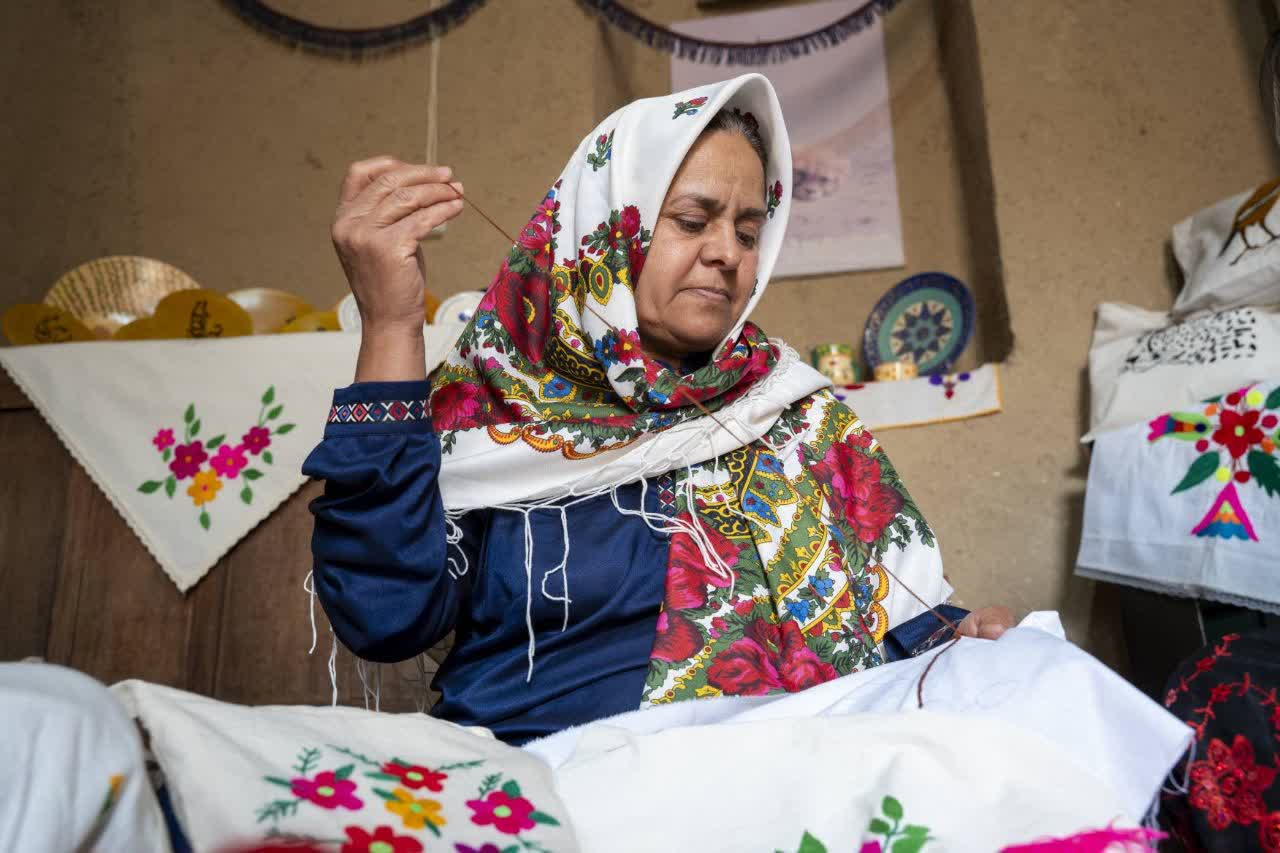
Embroidery Craft of Qaleh Bala Village Inscribed on Iran’s National Intangible Cultural Heritage List
The Head of the Shahrud Cultural Heritage, Tourism and Handicrafts Department has announced the inscription of the traditional “Qaleh Bala Embroidery” craft on Iran’s National Intangible Cultural Heritage List, describing the achievement as an important strategic step toward facilitating the village’s international registration process and strengthening its global tourism identity.
Seyyed Mohammad Sadegh Razavian said on Saturday, September 5, 2026, that the national registration of Qaleh Bala’s traditional embroidery skill represents more than the preservation of an artistic and ritual heritage. It also strengthens the cultural identity and heritage profile of the region.
He added that this authentic craft, characterized by indigenous motifs, colors inspired by the area’s distinctive natural environment, and techniques passed down through generations, is now recognized as a national cultural asset. The inscription further highlights the unique cultural and tourism potential of Qaleh Bala.
Referring to the connection between the national registration and international evaluation processes, Razavian noted that Qaleh Bala had previously been identified through specialized assessments as one of Iran’s selected destinations for participation in the Best Tourism Villages global initiative. The national recognition of one of the village’s most distinctive traditional crafts, he said, will now provide the village with an even stronger cultural profile in the eyes of international evaluators.
“This achievement is evidence of the authenticity, continuity, and depth of the local community’s living culture,” he said, adding that it could significantly strengthen Qaleh Bala’s prospects of achieving international recognition.
Razavian also emphasized the role of embroidery in supporting the local economy and empowering women artisans. In Qaleh Bala, embroidery is far more than a recreational activity; it is an important driver of sustainable handicraft-based economic development. Through this traditional craft, the village’s women artisans not only preserve their cultural identity but also contribute to employment and regional economic growth by creating authentic products rooted in local traditions.
“We believe that tourism development cannot be achieved without a strong connection to traditional crafts and intangible cultural heritage,” he said. “This national inscription marks the beginning of more structured support for the artisans of Qaleh Bala.”
In conclusion, Razavian stated that the department would continue to support the preservation and promotion of this valuable traditional skill by making full use of its legal and institutional capacities. The national registration of Qaleh Bala embroidery, he added, sends a clear message to the world: Qaleh Bala, while preserving its cultural authenticity, is ready to shine on the international stage as a model of cultural and sustainable tourism and to offer visitors an authentic experience of rural Iran.