Removing Investment Barriers and Advancing Strategic Heritage Projects Named among Semnan Province’s Priorities
The Deputy Governor-General for Economic Coordination of Semnan Province has emphasized the need to accelerate efforts to remove investment barriers, resolve the status of historic properties, develop tourism infrastructure, and support major provincial projects, highlighting the strategic role of cultural heritage, tourism, and handicrafts in economic growth, job creation, and investment attraction.
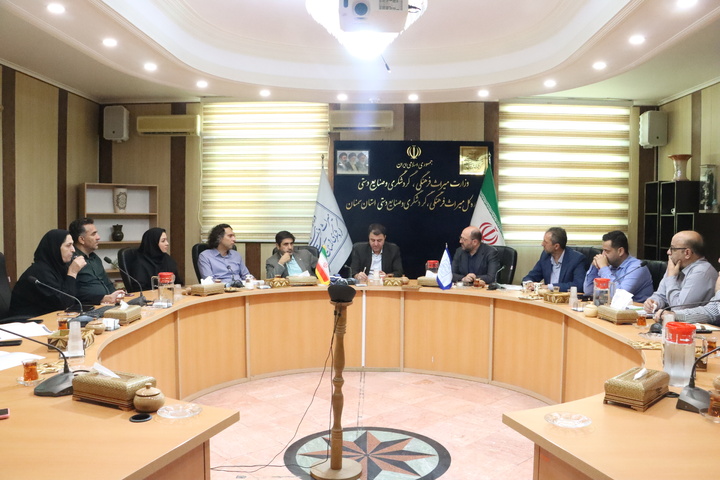
A joint meeting between Hamid Dehrouyeh, Deputy Governor-General for Economic Coordination of Semnan Province, provincial economic officials, and Jalal Tajik, Director General of Cultural Heritage, Tourism and Handicrafts of Semnan Province, along with his deputies, was held on Thursday, July 16, 2026. The meeting focused on key issues related to investment, tourism development, cultural heritage protection, and the growth of handicrafts.
Dehrouyeh stressed that cultural heritage, tourism, and handicrafts are among Semnan Province’s most important drivers of economic development. In addition to preserving the province’s historical and cultural identity, these sectors play a significant role in attracting investment, creating employment, increasing visitor stays, supporting local businesses, promoting balanced regional development, and generating sustainable income. He called for these sectors to receive stronger support through an economic and development-oriented approach.
Referring to the need to accelerate the resolution of investors’ concerns, the Deputy Governor-General said a specialized working group would be established within the provincial Department of Cultural Heritage, Tourism and Handicrafts. The group will review investors’ challenges as quickly as possible and, where feasible, resolve them without referring cases to the provincial Task Force for Facilitating Production and Removing Barriers to Investment.
Highlighting the province’s exceptional collection of historic buildings, Dehrouyeh called for faster decisions regarding the transfer, leasing, or attraction of investors for the UNESCO-listed Ahuan, Sangi, and Ajari caravanserais. He said these valuable heritage sites should not only be preserved and restored but also transformed into active tourism and economic destinations.
He also identified the Shah Abbas Caravanserai in Semnan as another provincial priority, emphasizing that a final decision should be made as soon as possible either to transfer the historic building to the private sector for investment or to make it publicly accessible for cultural, museum, and tourism purposes. Such action, he said, would both safeguard the heritage site and ensure its appropriate use.
Dehrouyeh further called for faster implementation of the province’s cultural projects, particularly the establishment of the Damghan Archaeological Museum. He noted that the museum could play an important role in showcasing Damghan’s rich historical heritage and strengthening cultural tourism in the region.
Referring to the process of seeking international recognition for Qaleh Bala Village in Shahrud County, Dehrouyeh announced the provincial government’s full support for the initiative. He added that, alongside efforts related to the village’s international recognition, resolving its internet connectivity issues was also being pursued through the relevant ministry, with the necessary instructions already issued. Reliable communications infrastructure, he noted, is an essential requirement for tourism development and providing high-quality services to visitors.
The Deputy Governor-General also announced the transfer of the Sur-e Sarakheh Tourism Complex to the Provincial Municipalities Cooperation Organization and the transfer of the historic Sheikh Ala al-Dawla Semnani Tomb Complex to the Department of Cultural Heritage, Tourism and Handicrafts of Semnan Province. He emphasized that following these transfers, the completion, restoration, revitalization, rehabilitation, and appropriate operation of the sites should be pursued seriously so that these assets can contribute to the development of tourism and the provincial economy.
Dehrouyeh described tourism infrastructure development as one of the most important requirements for economic growth in Semnan Province. He pointed to the completion of infrastructure at the Gardab Tourism Station, the development of a tourism camp and forest park in the Abr Forest, and the establishment of desert ecocamps as initiatives that could increase visitor stays while attracting investment, creating employment, strengthening local economies, and increasing tourism’s contribution to wealth creation across the province.
At the conclusion of the meeting, Jalal Tajik, Director General of Cultural Heritage, Tourism and Handicrafts of Semnan Province, and his deputies presented a report on major programs, ongoing projects, investment-related issues, and the needs of the cultural heritage, tourism, and handicrafts sectors. The participants also discussed practical solutions to accelerate development projects, remove existing barriers, and make greater use of the province’s historical and tourism potential as part of its broader economic development strategy.