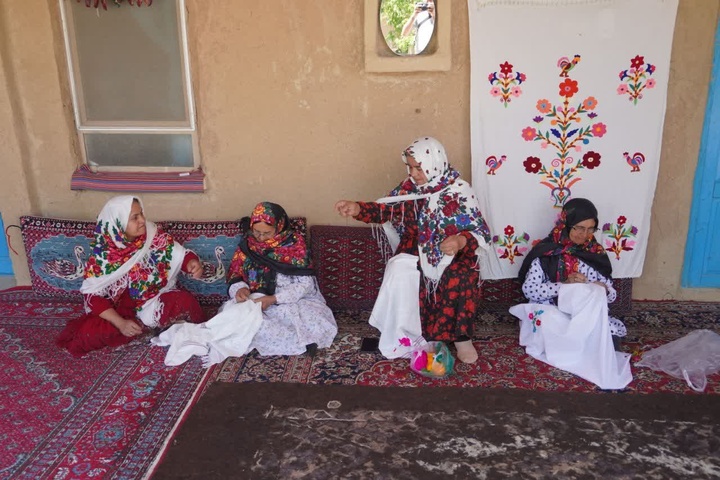
Embroidery Art in Qaleh Bala Village; A Narrative of Patterns, Threads, and Generations
In the heart of the desert, Qaleh Bala village is known not only for its adobe architecture and picturesque nature but also for a special fame due to an art that has flowed among its women for centuries; embroideries where each stitch narrates love, faith... Mirath-e Arya: Embroidery is one of the traditional and authentic arts of the women of Qaleh Bala village in Shahroud county, with a history of over three centuries... executed with specific precision. Embroidery in Qaleh Bala is not just an artistic activity, but also a cultural and social ritual intertwined with the religious beliefs of the people...
Mirath-e Arya: Embroidery is one of the traditional and authentic arts of the women of Qaleh Bala village in Shahroud county, which, with a history of more than three centuries, is still practiced with skill, taste, and love among the women of this region. This handicraft, in addition to its aesthetic appeal, plays an important role in family economies, cultural identity, and social beliefs. The embroidered designs are often inspired by nature, traditional motifs, and local poetry, and are stitched with colorful and durable threads on fabrics such as linen, cotton, and silk. Various techniques such as chain stitch, satin stitch, zigzag stitch, sepangeh stitch, dandan-moushi stitch, and chap-eh dozi stitch are used in this art, each executed with specific precision and skill. Embroidery in Qaleh Bala is not just an artistic activity, but also a cultural and social ritual intertwined with the religious beliefs of the people. Stitching on prayer mats and Quran covers is a symbol of respect and faith embedded within this art.
In the realm of Iran's traditional arts, embroidery holds a special place; an art that has emerged from the fabric of daily life and, through the skilled hands of women, has transformed into lasting patterns on fabric. This art is not only a manifestation of beauty and creativity but also a reflection of the culture, beliefs, and identity of the people of each region. Among Iran's villages, Qaleh Bala in Shahroud county is one of the vibrant and dynamic centers for preserving and continuing the art of embroidery. The women of this village, using colorful threads, traditional fabrics, and various stitching techniques, create works that are not only visually appealing but also carry meaning and messages. Designs inspired by nature, geometric patterns, local symbols, and classical poetry are imprinted on the fabrics, narrating taste, faith, and experience. Embroidery in Qaleh Bala is more than an artistic activity; it is a cultural and social ritual passed down from mothers to daughters through generations, and it continues to thrive within the flow of life.
This report aims to examine the various dimensions of embroidery art in Qaleh Bala village by analyzing stitching styles and techniques, the role of thread in the durability and beauty of the works, the tools used, the cultural, social, and economic functions, and the connection of this art with the religious beliefs of the region's people. Finally, an effort will be made to emphasize the importance of preserving and supporting this valuable heritage within the context of rural life.
Designs and Inspirations
The embroidered motifs are often inspired by nature, local culture, and traditional symbols. Designs such as the pomegranate flower, leaves, the saffron finch, the cheetah, geometric patterns, and even verses from Hafez, Rumi, and local poetry are imprinted on fabrics like linen, cotton, and silk. These designs, with colorful and vibrant threads, breathe new life into local clothing, prayer mats, tablecloths, and other traditional items.
Stitching Techniques
Embroidery in this village is performed using a combination of traditional techniques and improvisational skills. Common methods include chain stitch for creating continuous lines, satin stitch for filling large areas, zigzag stitch for geometric textures, sepangeh stitch for decorating garment edges with black thread, dandan-moushi stitch for neatening edges, and chap-eh dozi stitch for freehand and intuitive execution of designs. These stitches are executed with high precision and without the use of fabric holding tools, using only needle and thread.
The Role of Thread in Beauty and Durability
Thread is a key element in the quality and longevity of embroidered works. The skilled women use thin, colorful yarns that are resistant to washing and retain their color. However, very thin threads may be sensitive to detergents and lose their quality. Choosing the appropriate thread, depending on the type of design, application, and desired durability, is of great importance. Artists, with a thorough understanding of thread properties, select the best option for creating their works to ensure the beauty and strength of the piece.
Tools and Equipment
Embroidery tools include various needles of different thicknesses, cotton, silk, and colorful yarn threads, scissors for cutting excess threads, and fabrics with suitable textures such as silk, cotton, and linen. These simple tools, along with the artist's skill, provide the foundation for creating visually appealing and lasting works.
Time and Method of Execution
The time required for embroidery varies depending on the complexity of the design and the artist's skill. Simple designs may be completed in a few days, but complex and traditional designs can sometimes take weeks or months. The women of the village usually engage in embroidery alongside their daily activities, in family gatherings or local groups. This method, while strengthening social bonds, provides a platform for traditional education and the transfer of skills to young girls.
Religious and Social Beliefs
Embroidery in Qaleh Bala has a deep connection with the religious and social beliefs of the people. Stitching on prayer mats, Quran covers, and religious items is a symbol of the people's respect, faith, and spiritual values. Each motif carries a specific meaning, from blessings and prosperity to protection and reverence for sacred texts. Women create these works with great love and precision so that beauty and spirituality are showcased together.
History and Intergenerational Transfer
The villagers consider the history of this art to be over three hundred years old. Embroidery in Qaleh Bala is not just a skill but a lifestyle and a cultural ritual passed down from mothers to daughters through generations. The teaching of this art in the traditional way, within families and women's gatherings, continues and helps preserve this valuable heritage.
Embroidery in Qaleh Bala village is more than a handicraft; it is a symbol of the connection between culture, economy, faith, and feminine identity within the context of rural life. This art, by combining beauty, skill, and meaning, links generations like colorful threads and remains alive in the flow of life. Supporting this art is not only an act of preserving cultural heritage but also strengthening the capabilities, independence, and creativity of Iranian women. Today, as many traditional arts are fading into oblivion in the face of industrial life and changing lifestyles, the embroidery of Qaleh Bala remains alive with the colorful threads and skilled hands of the women of this village. This art is not only a cultural heritage but also a bridge between the past and the future, the preservation and support of which is a testament to the history, identity, and capabilities of Iranian women.
Report by Fatemeh Gholipour, researcher of cultural heritage and anthropology in Shahroud county.