Ecotourism accommodations played the role of passive defense and a safe social haven during the 40-day war.
The Deputy Minister of Tourism of the country, emphasizing the role of ecotourism accommodations in social resilience and crisis management, said: Ecotourism accommodations, during the 40-day war, by providing free accommodation for travelers and public services, played an effective role in passive defense and maintaining social peace. ... which indicates the immense capacity of the country's villages in the field of international tourism. He added: The villages of Riyab from Khorasan Razavi, Qaleh Bala from Semnan Province, ...
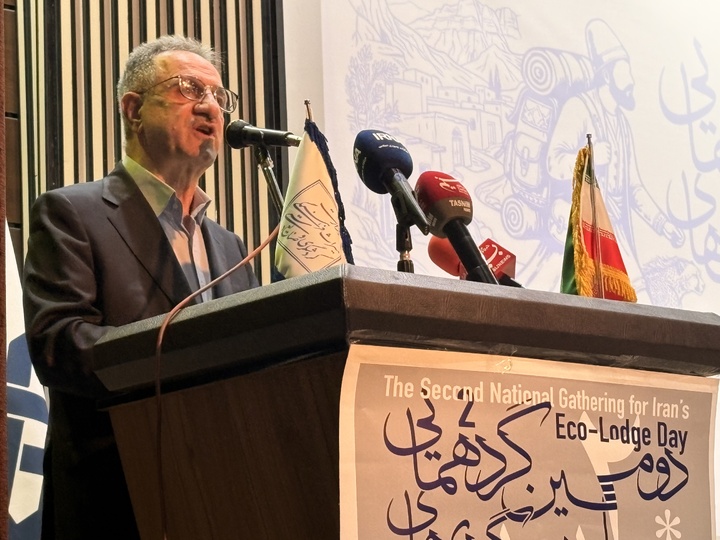
According to the reporter of Mirath-Aria, Anoushiravan Mohseni Bandpei, the Deputy Minister of Tourism of the country, at the second gathering of Iran's National Ecotourism Day, hosted by the Shahroud University of Medical Sciences, considered ecotourism as one of the most important strategic capacities of the country in the field of sustainable development, social resilience, and strengthening national cohesion, and said: Today, ecotourism is not merely an accommodation format or a type of travel, but rather a part of the country's social, cultural, and economic mechanisms for maintaining stability in normal and crisis situations.
He further pointed out the tourism capacities of Shahroud and stated: Shahroud, due to its unique natural, historical, and cultural diversity, is considered one of the most important tourist destinations in the east of the country; a city that hosts a diverse collection of Iran's attractions, from Abr Forest and Turan Biosphere Reserve to historical textures and tourism target villages.
Mohseni Bandpei also considered the region of Bastam and the shrine of the renowned Iranian mystic, Bayazid Bastami, as one of the most important centers of spiritual and cultural tourism in the country and added: The mystical, historical, and identity capacities of Bastam, along with its valuable architecture and civilizational background, can play an important role in the development of Iran's cultural and knowledge-based tourism.
He pointed out the operation of nearly four thousand ecotourism accommodations in the country and said: In recent years, these complexes have been able to form a successful model of balanced distribution of tourism benefits across Iran's geography; such that a significant share of financial turnover and employment has been transferred to villages, less-privileged areas, border regions, and local settlements.
The Deputy Minister of Tourism emphasized: The main advantage of ecotourism is its reliance on the real capacities of the local community; a capacity that stems from the indigenous architecture, rituals, handicrafts, local cuisine, and lifestyle of the people of each region, and this characteristic has made ecotourism more economically and socially sustainable compared to many capital-intensive models.
Mohseni Bandpei, referring to the developments and crises of recent months in the region, stated: During the 40-day war and the conditions resulting from regional tensions, a significant portion of the country's ecotourism accommodations acted beyond being just an accommodation unit, and with a responsible and public-spirited approach, they dedicated part of their capacity to the free accommodation of travelers, families, and individuals who faced difficulties during their journey or relocation. This valuable action was a clear manifestation of Iranian culture, social responsibility, and national solidarity that deserves appreciation.
He added: In such conditions, it became clear that ecotourism accommodations are not just economic players in the tourism industry, but are considered part of the country's passive defense capacity. The geographical distribution of these accommodations, their deep connection with local communities, high flexibility, and the ability to provide services in special circumstances have created an important capacity for crisis management, reducing population concentration, and maintaining social peace.
The Deputy Minister of Tourism continued: During the past Nowruz and the holy month of Ramadan, despite the psychological atmosphere resulting from regional developments, ecotourism accommodations played an important role in maintaining the dynamism of domestic tourism and creating a sense of security and tranquility among families. This experience showed that public-based and community-based tourism is more resilient compared to centralized models.
In another part of his speech, Mohseni Bandpei referred to the plan for the global registration of Iranian villages on the World Tourism Organization's list and said: In 2026, the Islamic Republic of Iran has nominated eight selected villages for registration on the list of the world's best tourist villages, which indicates the immense capacity of the country's villages in the field of international tourism.
He added: The villages of Riyab from Khorasan Razavi, Qaleh Bala from Semnan Province, Gisoum from Gilan, Shana-tarash from Mazandaran, Moil from Ardabil, Dark from Sistan and Baluchestan, Panar from Khuzestan, and Misr from Isfahan have been introduced as Iran's nominees for this global event.
The Deputy Minister of Tourism noted: The evaluation criteria of the World Tourism Organization in this process include the protection of resources and attractions, participation of local communities, social and environmental sustainability, development of rural tourism economy, infrastructure and communication, as well as health and safety; criteria, a significant part of which has historical and cultural roots in Iranian villages.
He considered the global registration of villages as an opportunity to introduce the true face of Iran internationally and added: This action, in addition to enhancing the country's tourism brand, can lead to attracting investment, strengthening the local economy, preventing rural migration, developing infrastructure, and a more active presence of Iranian villages in the global tourism network.
Mohseni Bandpei further stated that ecotourism is one of the most important areas for strengthening Iranian identity and cultural dialogue: Iran is a collection of diverse climates, cultures, languages, and narratives, and ecotourism provides the opportunity for direct interaction of tourists with this immense cultural treasure. This mutual understanding not only strengthens national cohesion but also helps preserve intangible heritage and the continuation of indigenous lifestyles.
The Deputy Minister of Tourism emphasized the necessity of serious support for existing ecotourism accommodations and said: Today, our most important priority is not just quantitative development, but the preservation, stabilization, and empowerment of current complexes. Many activists in this field, despite economic problems, rising costs, and infrastructural limitations, are still active with motivation and passion, and it is necessary to increase material and moral support for these complexes.
He also announced plans to increase the share of special facilities for ecotourism accommodations in the year 1405 (Gregorian 2026) and added: In next year's support policies, we will strive to allocate a larger share of low-interest loans, support incentives, and empowerment programs to the ecotourism sector so that these complexes can upgrade their services while preserving their indigenous identity and cultural authenticity.
Mohseni Bandpei mentioned the development of technological infrastructure, simplification of administrative processes, specialized training for operators, strengthening local brands, and completing the rural tourism value chain as other plans of the Deputy Ministry of Tourism to support ecotourism accommodations and said: The experience of recent years has shown that an indigenous accommodation in the heart of a village can sometimes play a role beyond a large and costly project in job creation, preserving the local population, increasing social hope, and safeguarding Iranian culture.
In the end, the Deputy Minister of Tourism congratulated the National Ecotourism Day to the activists in this field and appreciated the efforts of local communities, operators, and families who have kept the lamp of Iranian hospitality lit in the farthest corners of the country and said: The future of tourism in Iran is more than ever linked to indigenous capacities, public participation, and development based on local identity, and ecotourism will be one of the most important pillars of this path.